

Bridging Corporate Wellness Gaps with Expert Mental Health Support
In today’s fast-paced corporate world, employee wellbeing is more than just a box to tick. Across the UK, organisations are recognising that mental health directly affects productivity, engagement, and workplace harmony. In fact, 1 in 6 UK employees experience mental health issues at work annually, highlighting the urgent need for effective support. Yet, despite investment in wellness programmes, many employees still feel unsupported.
This is where a mental health social worker comes in. At Spark Your Health, we know how these professionals bridge the gap between corporate initiatives and the real mental health needs of employees. Their expertise ensures that staff receive specified support, enabling them to thrive both professionally and personally.
Understanding the Gap in Corporate Wellness Programmes
Many companies run wellness programmes that look impressive on paper. They may include fitness sessions, mindfulness workshops, or general wellbeing tips. But these programmes often fail to address complex mental health challenges.
A mental health social worker adds the missing link. They assess individual needs, provide practical guidance, and implement solutions that align with corporate goals. This ensures that mental health support is proactive, accessible, and effective.
By integrating social workers, organisations can identify stressors early, offer appropriate interventions, and foster a healthier, more resilient workforce. In the UK, where workplace stress and mental health concerns are increasingly recognised, this approach is essential.
The Role of Mental Health Social Workers in Occupational Wellbeing
Social workers in corporate environments have a multi-faceted role. They act as the bridge between employees and management, ensuring mental health initiatives are effective and inclusive.
According to a recent report by the UK Health and Safety Executive, organisations with proactive mental health support see a 30% reduction in employee absenteeism, highlighting the importance of professional guidance in workplace wellbeing.
Some of their key responsibilities include:
- Conducting assessments to understand individual employee needs.
- Advising management on stress reduction, work-life balance, and mental health awareness.
- Offering direct support or referrals for staff experiencing mental health challenges.
- Designing programmes that align corporate wellness goals with employee needs.
This focus on occupational wellbeing ensures that companies not only comply with regulations but actively create a positive workplace culture. Collaborating with HR and occupational health teams helps identify early signs of stress and intervene before issues escalate. Resources such as What Not to Say to Occupational Health UK highlight the importance of clear communication when addressing mental health in the workplace.
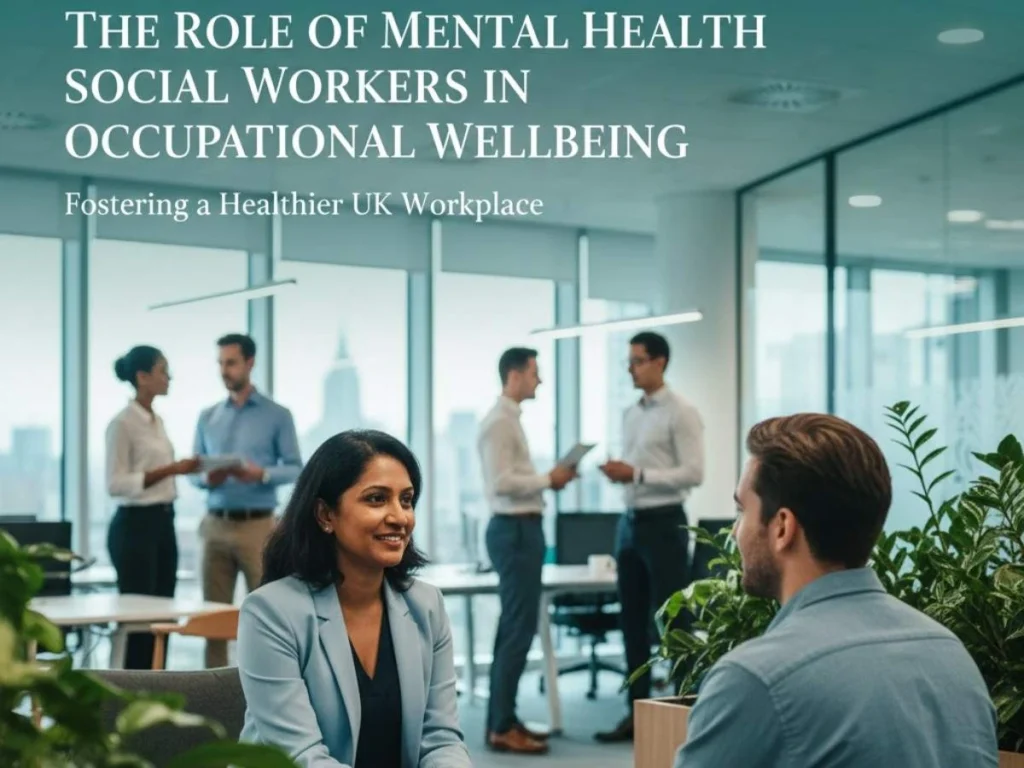
How Mental health support worker Bridge the Gap
The main contribution of social workers lies in connecting corporate wellness programmes with real employee needs. Many initiatives are excellent in theory but lack practical application. Employee wellbeing social workers fill this void by implementing strategies that fit the unique dynamics of each organisation.
They focus on employee education. Through workshops, one-to-one consultations, and seminars, they empower staff to manage mental health proactively. Social workers guide employees through workplace challenges, helping them build resilience and maintain a healthy work-life balance. This reduces absenteeism and boosts morale.
Social workers also influence policy development. They advise on mental health policies, early intervention programmes, and support networks. Aligning these policies with corporate goals creates a workplace where employees feel valued, supported, and motivated. Effective intervention can even reduce the need for extended stress leave, as discussed in Maximum Time Off for Stress in the UK.
Linking Corporate Wellness Programmes with Employee Needs
At Spark Your Health, we emphasise connecting wellness initiatives with tangible outcomes. Social workers enhance programmes such as Corporate Wellness Programmes UK, ensuring they are not only engaging but also actionable.
Employees also benefit from accessible mental health resources. Knowing that support is personalised and effective reduces anxiety and improves confidence at work. Resources like Employee Mental Health Resources in the UK are vital, but social workers ensure employees know how to use them effectively.
Practical Steps for UK Organisations
For companies looking to strengthen employee wellbeing:
- Review current wellness programmes to spot gaps in mental health support.
- Employ qualified social workers for guidance and direct support.
- Encourage collaboration between social workers, HR, and occupational health teams.
- Develop proactive policies for stress management, early intervention, and overall wellbeing.
These steps show a genuine commitment to staff wellbeing and improve engagement and productivity.
How Mental Health Social Workers Promote a Positive Workplace Culture
Employee wellbeing social workers help foster a culture of openness and resilience. Staff feel safe discussing mental health concerns without fear of stigma.
Organisations benefit from reduced burnout, better communication, and stronger team dynamics. Social workers act as trusted mediators between management and employees, ensuring policies and programmes are practical, effective, and sensitive to real-world challenges.
Conclusion: Investing in Employee Wellbeing
A mental health social worker is an invaluable addition to any UK workplace. By bridging the gap between corporate wellness programmes and real employee needs, they help create healthier, happier, and more productive teams.
At Spark Your Health, we believe supporting mental health through expert guidance is a strategic investment. Companies that prioritise this approach see long-term benefits in productivity, staff retention, and workplace culture.
Frequently Asked Questions (FAQs)
Q:1 What is a mental health social worker in a corporate setting?
They are professionals who provide guidance, support, and interventions to employees, ensuring mental health needs are met within the workplace.
Q:2 Why are occupational wellbeing social workers important for corporate wellness?
They bridge the gap between generic wellness initiatives and real employee needs, helping reduce stress and boost engagement.
Q:3 Can a mental health support worker prevent stress-related absences?
Yes. By offering early intervention and support, they can significantly reduce the likelihood of extended leave due to stress.
Q:4 How can UK companies integrate social workers into their wellness programmes?
Organisations can hire qualified social workers, collaborate with HR and occupational health, and design proactive mental health policies.
Take the first step today – ensure your employees receive the mental health support they deserve.