Updated for World Menopause Day 2026
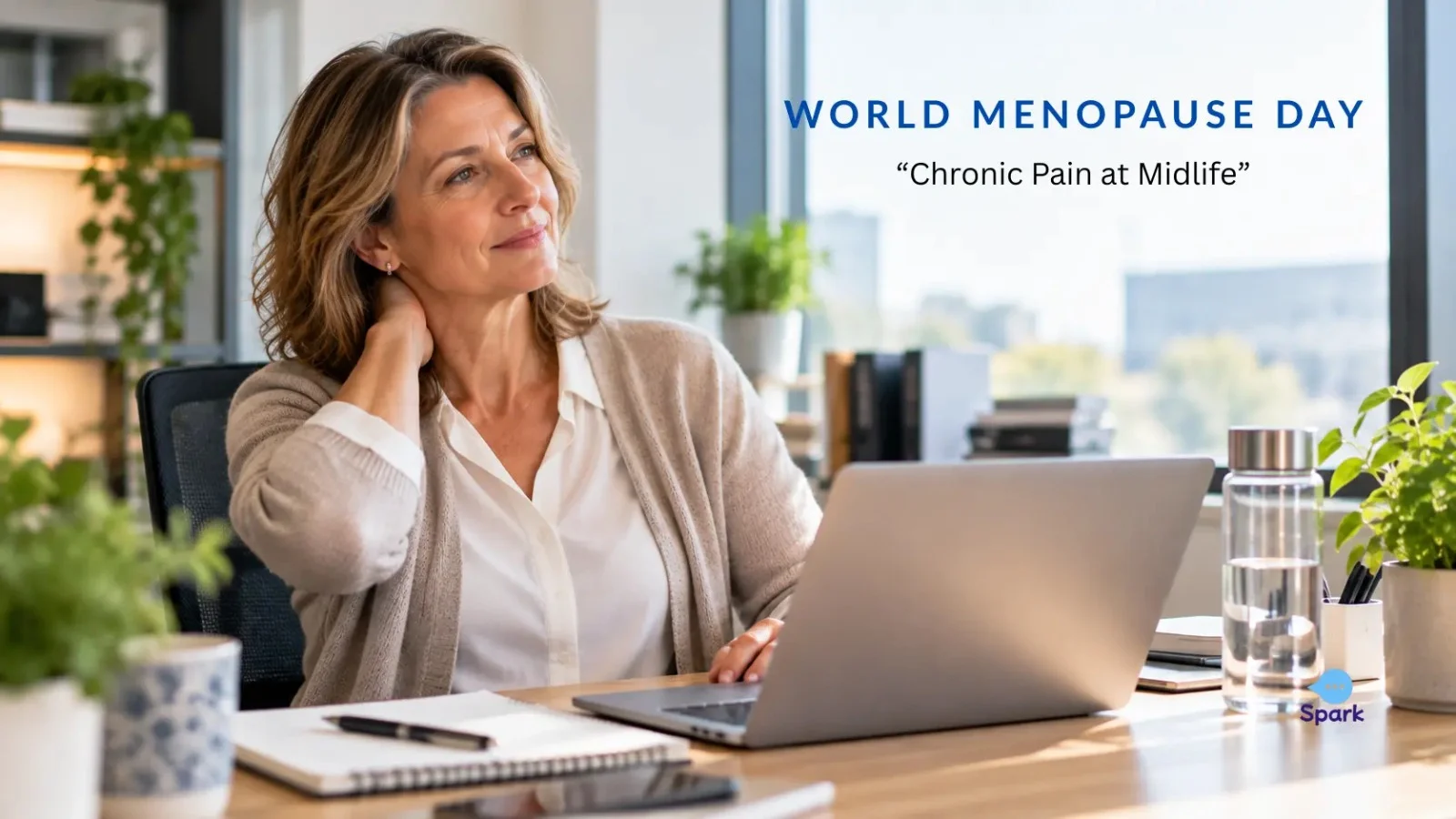
World Menopause Day 2026 takes place on Sunday, 18 October. This year’s official theme is “Chronic Pain At Midlife”, with a focus on moving from recognition towards evidence-based care.
The theme matters because pain during midlife should not simply be dismissed, but it should not automatically be assumed to be caused by menopause either. Muscle aches and joint pains can occur during perimenopause and menopause, while persistent or unexplained pain can have many other causes.
This guide explains the 2026 theme, common questions about menopause and working life, when to seek healthcare advice, and practical steps UK employers can take to support people experiencing menopause at work.
World Menopause Day 2026: Key Facts and Workplace Support
World Menopause Day 2026 at a Glance
| Date | Sunday, 18 October 2026 |
|---|---|
| 2026 theme | Chronic Pain At Midlife |
| Campaign focus | Better recognition and evidence-based care for chronic pain during midlife |
| When is World Menopause Day held? | 18 October every year |
| Who founded it? | International Menopause Society |
| When did it begin? | 2009 |
| Purpose | To improve awareness, education and support around menopause and women’s health through midlife and beyond |
When Is World Menopause Day 2026?
World Menopause Day 2026 is Sunday, 18 October. World Menopause Day takes place on 18 October every year.
The International Menopause Society created World Menopause Day in 2009 to increase awareness of menopause and improve knowledge, research and support for people going through the menopause transition.
What Is the World Menopause Day 2026 Theme?
The official World Menopause Day 2026 theme is “Chronic Pain At Midlife”.
The International Menopause Society is using the campaign to encourage better recognition of chronic pain during midlife and a stronger focus on evidence-based, individualised care.
This does not mean that every pain experienced during perimenopause or menopause is caused by hormonal change.
A more useful message is:
Pain deserves to be taken seriously, properly assessed and not automatically dismissed as either “just menopause” or simply part of getting older.
You can read the official International Menopause Society World Menopause Day 2026 resources .
What Is World Menopause Day?
World Menopause Day is an international health awareness day held every 18 October. It focuses attention on menopause, women’s health during midlife and the quality of information and support available to people going through the menopause transition.
Each year, the International Menopause Society chooses a specific theme and develops evidence-based resources for healthcare professionals, individuals and communities.
Why does World Menopause Day matter?
Menopause experiences vary considerably. Some people have few symptoms, while others find symptoms affect sleep, concentration, physical comfort, relationships, emotional wellbeing and their ability to work as they normally would.
A useful awareness day should therefore do more than encourage people to talk. It should help people find trustworthy information, know when to seek healthcare advice and understand what practical support may be available.
What Does “Chronic Pain at Midlife” Mean?
Chronic pain generally describes pain that continues over time rather than resolving as expected after a short illness or injury.
The 2026 World Menopause Day campaign brings particular attention to how chronic pain is recognised and managed in women during midlife.
Pain can affect much more than physical comfort. Ongoing pain can make ordinary activities, sleep, concentration, movement and work more difficult.
Importantly, the campaign does not give people a reason to self-diagnose the cause of pain. Midlife pain can have many possible explanations, so new, persistent or troublesome symptoms deserve appropriate assessment.
Can Perimenopause or Menopause Affect Joint and Muscle Pain?
Yes, muscle aches and joint pains are recognised symptoms that can occur during perimenopause and menopause.
NHS guidance also notes that joint pain can sometimes continue after menopause.
However, experiencing pain during midlife does not prove that menopause is the cause. Arthritis, injury, inflammatory conditions and many other health issues can also cause pain.
If pain is new, persistent, worsening or interfering with everyday life, it is sensible to seek medical advice rather than assuming it is simply part of menopause.
For current information about recognised symptoms, see NHS guidance on menopause and perimenopause symptoms .
When Should You Speak to a Healthcare Professional About Menopause Symptoms?
You do not need to wait until symptoms become unbearable before asking for help.
NHS guidance recommends contacting your GP if you think you are experiencing symptoms of menopause or perimenopause and want to understand your options.
It is particularly important to seek appropriate advice when:
- pain is new, persistent or becoming more difficult to manage;
- symptoms are disrupting sleep, work or everyday activities;
- you are unsure whether symptoms may be related to menopause;
- you are experiencing palpitations;
- your bleeding pattern has changed and you are bleeding more rather than less; or
- you experience any vaginal bleeding after 12 months without a period.
Menopause treatment is individual. Options may include lifestyle approaches, hormone replacement therapy (HRT) or non-hormonal treatments depending on symptoms, health history and individual preferences.
Decisions about treatment should be made with an appropriate healthcare professional. See the NHS menopause treatment guide for current information.
Menopause Is More Than Hot Flushes: How Can Symptoms Affect Working Life?
Hot flushes and night sweats are widely recognised, but they are only part of the picture.
NHS guidance also recognises symptoms including sleep problems, mood changes, poor memory, difficulty concentrating or “brain fog”, headaches, migraines, muscle aches and joint pains.
At work, those symptoms can show up in very practical ways.
| Possible difficulty | How it might affect work |
|---|---|
| Sleep problems or night sweats | Fatigue, slower concentration or difficulty with early starts |
| Brain fog or memory problems | Difficulty retaining information, switching tasks or managing interruptions |
| Joint or muscle pain | Discomfort while sitting, standing, lifting, travelling or performing physical duties |
| Hot flushes | Discomfort in warm environments, uniforms or poorly ventilated spaces |
| Heavy or changing periods | Greater need for toilet access, breaks or privacy |
| Mood changes or anxiety | Reduced confidence or greater difficulty coping with pressure |
Not everyone will experience these symptoms, and people who do experience them will not necessarily need the same workplace support.
Can Menopause Affect Work Performance?
Menopause symptoms can sometimes affect how easy it feels to work at your usual level, particularly when sleep, concentration, pain or fatigue are involved.
That does not mean someone has suddenly become less skilled or permanently less capable.
For example, an employee who is sleeping poorly may find an early morning meeting harder than usual. Someone experiencing brain fog may benefit from clearer written priorities or fewer unnecessary interruptions. A person experiencing pain may need changes to their workstation or working pattern.
Acas advises employers to consider whether menopause symptoms could be contributing to performance or attendance difficulties before jumping to conclusions about capability or attitude.
The useful question is often:
What is making the work harder right now, and is there a practical change that could help?
Should I Tell My Manager I’m Going Through Menopause?
Whether you tell your manager about menopause is a personal decision.
You should not feel expected to discuss private health information with colleagues simply because an organisation is running a menopause-awareness campaign.
However, a private conversation with your manager, HR or another appropriate person may be useful if symptoms are affecting work and you would benefit from practical support.
You do not necessarily need to describe every symptom or share your full medical history. It may be more useful to explain:
- what aspect of work is becoming difficult;
- how the difficulty is affecting you;
- what change might help;
- whether you need temporary or longer-term support; and
- when any agreed changes should be reviewed.
For example:
“My sleep has been very disrupted recently and early starts are becoming difficult. Could we discuss a temporary change to my start time and review it in a few weeks?”
What Workplace Adjustments Can Help With Menopause?
There is no single “menopause adjustment” that works for everyone. Support should respond to the person’s symptoms, job and working environment.
Current Acas and GOV.UK guidance identifies a range of practical workplace changes that employers can consider.
| Difficulty | Possible workplace response |
|---|---|
| Poor sleep or fatigue | Flexible start or finish times where practical |
| Hot flushes | Fan, ventilation, temperature control or a cooler workstation |
| Need for recovery breaks | Ability to take appropriate breaks and access a private rest space |
| Heavy or unpredictable periods | Easy access to toilets and appropriate breaks |
| Joint or muscle pain | Ergonomic furniture, workstation changes or temporary duty adjustments where appropriate |
| Brain fog or concentration difficulties | Clear priorities, written follow-ups and reducing unnecessary interruptions where possible |
| Symptoms affected by commuting or the workplace environment | Home working or alternative work location where practical |
| Uniform discomfort | Review clothing or uniform requirements where possible |
| Complex health-and-work questions | Occupational health advice |
Adjustments should normally be reviewed because menopause symptoms and work needs can change over time.
GOV.UK’s current employer guidance specifically identifies flexible hours, private rest areas, ergonomic furniture, specialist health advice, temperature and ventilation as examples of menopause-supportive workplace changes.
When Can Occupational Health Help With Menopause at Work?
Occupational health can be useful when an employee and employer understand that health is affecting work but are unsure what support would be appropriate.
An occupational health professional may consider:
- how symptoms affect the person’s particular job;
- whether working conditions are making symptoms harder to manage;
- possible temporary or longer-term workplace adjustments;
- whether working hours or duties need reviewing;
- fitness for particular tasks; and
- whether another review would be useful.
Occupational health is not there to tell someone whether they “really have menopause”. Its role is work-focused.
Spark’s Occupational Health Assessment UK guide explains what happens during an assessment, confidentiality, reports and employee rights.
Menopause, Reasonable Adjustments and UK Employment Law
Menopause is not itself a separate protected characteristic under the Equality Act 2010.
However, treatment related to menopause symptoms can potentially involve existing protected characteristics including age, disability, sex and gender reassignment.
In some circumstances, menopause symptoms may meet the legal definition of disability. Where the Equality Act duty applies, the employer must make reasonable adjustments to reduce or remove disadvantage.
Employers should avoid turning every support conversation into a debate about whether someone meets a legal definition.
Acas recommends focusing on the person’s needs, discussing practical support and reviewing whether agreed changes are working.
Read Acas guidance on menopause and discrimination for current employment-law information.
How Should Managers Talk About Menopause at Work?
Managers do not need to become menopause experts or give medical advice. They do need to create a respectful route for employees to raise concerns.
A simple approach is:
Ask
Start with the work issue rather than making assumptions about someone’s health.
“Is there anything about work that is making things more difficult at the moment?”
Listen
Give the employee room to explain what they need without asking unnecessary personal questions.
Agree
Decide what practical workplace changes can reasonably be tried and record what has been agreed.
Review
Arrange a follow-up rather than assuming an adjustment that works today will remain right indefinitely.
Acas specifically recommends early conversations and regular follow-up because needs may change through different stages of menopause.
The Spark Menopause-Friendly Workplace Check
World Menopause Day is a useful moment for employers to ask whether support works in practice, not only whether a policy exists.
Listen
- Do employees know who they can speak to privately?
- Do managers know how to respond sensitively?
- Are employees asked about practical barriers rather than being expected to suggest medical solutions?
- Can people give feedback without publicly disclosing personal health information?
Adjust
- Can working hours or breaks be adapted where appropriate?
- Can temperature and ventilation be improved?
- Are toilet and private rest facilities practical?
- Can uniforms, workstations or duties be reviewed where needed?
- Is occupational health available for more complex cases?
Review
- Did the agreed change actually help?
- Have symptoms or work requirements changed?
- Does the manager need additional guidance?
- Is an organisational policy or process creating an unnecessary barrier?
Support should be individual, practical and open to review.
What Is a Menopause Risk Assessment?
A menopause risk assessment looks at aspects of work that could make menopause symptoms harder to manage and considers whether practical workplace changes could reduce those difficulties.
It should be connected to the employer’s wider health and safety responsibilities rather than treated as a medical assessment of the employee.
Depending on the workplace, relevant questions may include:
- Is the environment excessively hot or poorly ventilated?
- Can workers take appropriate breaks?
- Is toilet access adequate?
- Could uniforms make symptoms more difficult to manage?
- Are shifts or working hours creating avoidable difficulties?
- Does the employee have sufficient control over their immediate working environment?
- Are managers confident about discussing workplace support?
In March 2026, the UK government published specific guidance on conducting menopause risk assessments as one of its recommended actions for employers.
What Are Menopause Action Plans for UK Employers in 2026?
This is an important development for larger UK employers.
In 2026, organisations with 250 or more employees can voluntarily publish an action plan alongside their gender pay gap information.
The plan can explain the steps the organisation is taking to:
- address its gender pay gap; and
- support employees experiencing menopause.
Current government guidance provides evidence-informed actions such as:
- offering workplace adjustments;
- providing occupational health advice;
- training managers;
- reviewing policies and procedures;
- creating support groups or networks; and
- carrying out menopause-related workplace risk assessment.
Government guidance states that, subject to secondary legislation, publishing these action plans is expected to become mandatory for relevant employers from spring 2027.
Employers should use the current GOV.UK action-plan guidance rather than relying on older summaries, as requirements may continue to develop.
Does Every Workplace Need a Menopause Policy?
There is no universal requirement for every UK employer to create a standalone menopause policy.
What matters is whether the organisation’s policies and management practices actually support employees experiencing menopause.
Acas recommends reviewing existing policies that may interact with menopause, including:
- health and safety;
- wellbeing;
- diversity and inclusion;
- flexible working;
- absence management; and
- sickness reporting.
A beautifully written menopause policy has limited value if managers do not understand it or employees do not feel able to use the support it describes.
How Should Menopause-Related Absence Be Managed?
Menopause-related sickness absence should be handled sensitively and consistently.
Acas advises that it can be good practice to record menopause-related absence separately from other sickness absence where appropriate.
This can help employers avoid a situation where attendance triggers or formal procedures are applied without recognising the underlying health issue.
Managers should also consider whether the workplace itself is making symptoms harder to manage and whether an adjustment could reduce future absence.
Which Type of Workplace Support Might Be Relevant?
Menopause support does not sit in isolation. Different situations may need different routes.
| Situation | Useful next step |
|---|---|
| A health issue is affecting someone’s ability to do their job | Occupational Health Assessment UK |
| An employee wants confidential emotional or practical support | Employee Assistance Programme UK |
| Stress is producing physical symptoms | Physical Signs of Stress |
| The organisation wants to understand its wider mental health support options | Employee Mental Health Resources UK |
8 Meaningful World Menopause Day Ideas for UK Workplaces
World Menopause Day activities are most useful when they improve understanding or lead to a practical change.
1. Share trusted menopause information
Use NHS, Acas, GOV.UK and International Menopause Society resources rather than relying on unsourced health claims from social media.
2. Brief managers
Give managers practical guidance on conversations, privacy, workplace adjustments and where to refer more complex questions.
3. Review your support route
Can an employee quickly work out who to speak to about menopause at work? If not, simplify the process.
4. Ask employees about practical barriers
Instead of asking people to share personal menopause stories, ask what could make the workplace easier to navigate.
5. Review the physical working environment
Look at temperature, ventilation, toilet access, rest areas, uniforms and workstation design.
6. Review occupational health access
Make sure managers understand when specialist work-health advice may be useful and how employees are referred.
7. Check policies and absence processes
Make sure menopause-related difficulties will not automatically be treated as poor attendance, poor attitude or lack of capability without appropriate consideration.
8. Commit to one action after 18 October
Choose one practical improvement, give it an owner and set a date to review progress.
A small change that survives World Menopause Day is more useful than a large campaign that disappears the following week.
What Should Employers Avoid on World Menopause Day?
- Do not force personal disclosure. Employees should decide what health information they want to share.
- Do not ask one employee to represent everybody experiencing menopause. Experiences can differ significantly.
- Do not trivialise symptoms. Jokes about age, hot flushes, mood or memory can undermine trust and may also create discrimination or harassment concerns.
- Do not assume every midlife symptom is caused by menopause. Employers should not diagnose employees.
- Do not give medical treatment advice. Signpost employees to appropriate healthcare support instead.
- Do not use a wellbeing webinar as a substitute for workplace adjustments. If working conditions are making symptoms harder to manage, the conditions may need attention.
- Do not collect feedback and then ignore it. Tell employees what you heard and what action can realistically follow.
- Do not make 18 October the organisation’s entire menopause strategy. Employees need access to support throughout the year.
World Menopause Day Should Lead to Better Everyday Support
Awareness is useful when it gives someone better information or makes it easier to ask for help.
The 2026 theme is a reminder that pain at midlife deserves careful attention. It should not be dismissed, but nor should persistent pain automatically be labelled as menopause without appropriate healthcare assessment.
The same principle applies at work.
Managers do not need to diagnose menopause. They need to listen, understand how work is being affected, consider appropriate practical changes and review whether those changes are helping.
For employers, World Menopause Day is therefore a useful question rather than simply a date in the wellbeing calendar:
What could we make easier for employees after 18 October than it was before?
Building a More Supportive Workplace Beyond Awareness Days
Menopause support works best when it forms part of a wider employee wellbeing system rather than operating as a separate annual campaign.
That wider system may include supportive managers, occupational health, confidential mental health resources, workplace adjustments, stress prevention and accessible day-to-day wellbeing support.
Organisations reviewing how these elements fit together can explore Spark’s corporate wellbeing solutions for UK employers .
Continue Exploring Workplace Health & Wellbeing
When health is affecting work
Understand occupational health assessments, confidentiality, reports and workplace adjustments.
When someone needs confidential support
Learn how Employee Assistance Programmes work, what they may cover and how confidentiality works.
Understanding wider workplace mental health support
Explore EAPs, occupational health, manager support and other mental health resources.
Building a healthier workplace
Explore Spark’s approach to year-round employee health and wellbeing.
World Menopause Day 2026 FAQs
When is World Menopause Day 2026?
World Menopause Day 2026 is on Sunday, 18 October. World Menopause Day takes place on 18 October every year.
What is the World Menopause Day 2026 theme?
The official 2026 theme is “Chronic Pain At Midlife”. The International Menopause Society is focusing on better recognition and evidence-based care for chronic pain during midlife.
What is World Menopause Day?
World Menopause Day is an international awareness day held every 18 October. It was founded by the International Menopause Society in 2009 to improve awareness, education and support around menopause and midlife women’s health.
Can menopause cause joint or muscle pain?
Muscle aches and joint pains are recognised symptoms that can occur during perimenopause and menopause. However, pain can have many causes, so persistent or unexplained pain should not automatically be assumed to be caused by menopause.
Can menopause cause brain fog at work?
Problems with memory and concentration, often described as brain fog, are recognised menopause and perimenopause symptoms. At work, clear priorities, written information and reducing unnecessary interruptions may help some people manage these difficulties.
Should I tell my employer I am going through menopause?
Disclosure is a personal choice. You may find a private conversation useful if symptoms are affecting work and you would benefit from workplace support. You do not need to discuss menopause publicly or share more personal health information than is necessary.
What workplace adjustments can help with menopause?
Depending on the employee and job, practical changes may include flexible hours, additional breaks, private rest space, improved temperature or ventilation, ergonomic equipment, home working where practical, modified duties or occupational health advice.
Does an employer have to make reasonable adjustments for menopause?
Menopause itself is not a separate protected characteristic under the Equality Act 2010. In some cases, however, menopause symptoms may amount to a disability. Where the Equality Act duty applies, the employer must make reasonable adjustments to reduce or remove disadvantage.
Do UK employers need a menopause policy?
There is no universal requirement for every employer to have a standalone menopause policy. Employers should still make sure their health and safety, flexible working, wellbeing, equality and absence processes support people experiencing menopause appropriately.
What is a menopause risk assessment?
A menopause risk assessment considers workplace factors that may make symptoms harder to manage, such as temperature, ventilation, shift patterns, toilet access, uniforms, rest facilities and flexibility. It can help employers identify appropriate workplace changes.
What are menopause action plans for employers?
In 2026, UK organisations with 250 or more employees can voluntarily publish an action plan alongside their gender pay gap data, including actions to support employees experiencing menopause. Current government guidance says publication is expected to become mandatory from spring 2027, subject to secondary legislation.
How can workplaces mark World Menopause Day meaningfully?
Useful actions include sharing trusted information, briefing managers, reviewing workplace adjustments, checking occupational health routes, reviewing relevant policies and committing to at least one practical improvement that continues after 18 October.
Sources and Further Reading
- International Menopause Society – World Menopause Day 2026
- NHS – Symptoms of menopause and perimenopause
- NHS – Treatment for menopause and perimenopause
- Acas – Supporting workers through menopause
- Acas – Talking with workers about menopause
- Acas – Menopause and discrimination
- GOV.UK – Workplace adjustments for employees experiencing menopause
- GOV.UK – Conduct a menopause risk assessment
- GOV.UK – Creating an action plan: guidance for employers
Last factual review: 8 October 2026.