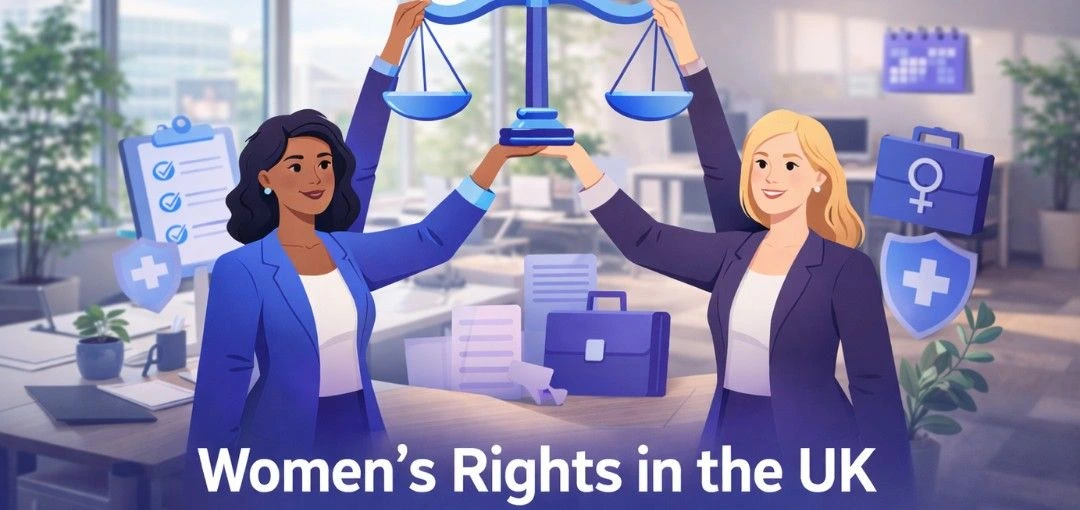
In modern UK employment law, the rights of women are protected through a combination of legislation, workplace regulations, and government-backed equality initiatives. From the Equality Act 2010 protection against discrimination to updated policies on maternity leave, workplace safety, and health accommodations, UK law ensures women have legal safeguards to work, progress, and thrive professionally.
Understanding these legal protections is essential not only for female employees but also for HR leaders and organisations seeking to build gender equitable workplaces while staying compliant with evolving legislation.
If your organisation wants to strengthen compliance while improving employee wellbeing, integrating structured Corporate Wellbeing Programs is increasingly recognised as a proactive approach to protecting employee rights and reducing workplace risk.
📩 For guidance on building compliant wellness strategies that support women’s workplace rights, organisations can also reach out to Spark Your Health at info@sparkyourhealth.co.uk or contact us now to explore practical solutions.
Understanding the Rights of Women in the UK Legal System
The rights of women UK are rooted in several key legislative frameworks designed to ensure fairness, dignity, and opportunity in workplaces and public life. Over the past two decades, UK employment law has increasingly focused on eliminating structural barriers that historically limited women’s professional advancement.
At the centre of these protections lies the Equality Act 2010 protection, which consolidated previous anti-discrimination laws into a single comprehensive framework. It ensures that employers, public institutions, and service providers cannot discriminate based on sex or related characteristics.
Within workplaces, the law recognises multiple protected characteristics in the workplace, including:
- Sex
- Pregnancy and maternity
- Marriage or civil partnership
- Gender reassignment
These protections extend across recruitment, promotion, pay structures, workplace policies, and dismissal procedures.
However, discrimination does not always appear obvious. A common legal challenge arises through indirect sex discrimination, where seemingly neutral workplace policies disproportionately disadvantage women. For example, rigid work schedules may unintentionally affect mothers with childcare responsibilities.
For organisations seeking to build inclusive cultures, these legal protections also reinforce broader commitments to Equality, Diversity, and Inclusion (EDI) strategy, ensuring that compliance aligns with organisational values.
Historically, the advancement of women’s legal rights was strongly influenced by early feminist and feminism movements advocating for equality in voting, employment, and healthcare. Today, these efforts continue through structured corporate and legislative reforms that strengthen workplace equality.
Key UK Laws That Protect Women
- Equality Act 2010 – Protects against sex, pregnancy, maternity, and gender-based discrimination.
- Employment Rights Act – Covers employment contracts, unfair dismissal, and flexible working rights.
- Worker Protection Act (Sexual Harassment) – Ensures safe reporting mechanisms and protects women from harassment.
- Maternity and Parental Leave Regulations – Provide statutory maternity pay, leave, and redundancy protection for new mothers.
Workplace Equality and Professional Rights for Women
The rights of women UK in professional settings extend far beyond anti-discrimination protections. UK employment law actively promotes fair pay, career advancement, and transparent corporate practices that address gender inequality.
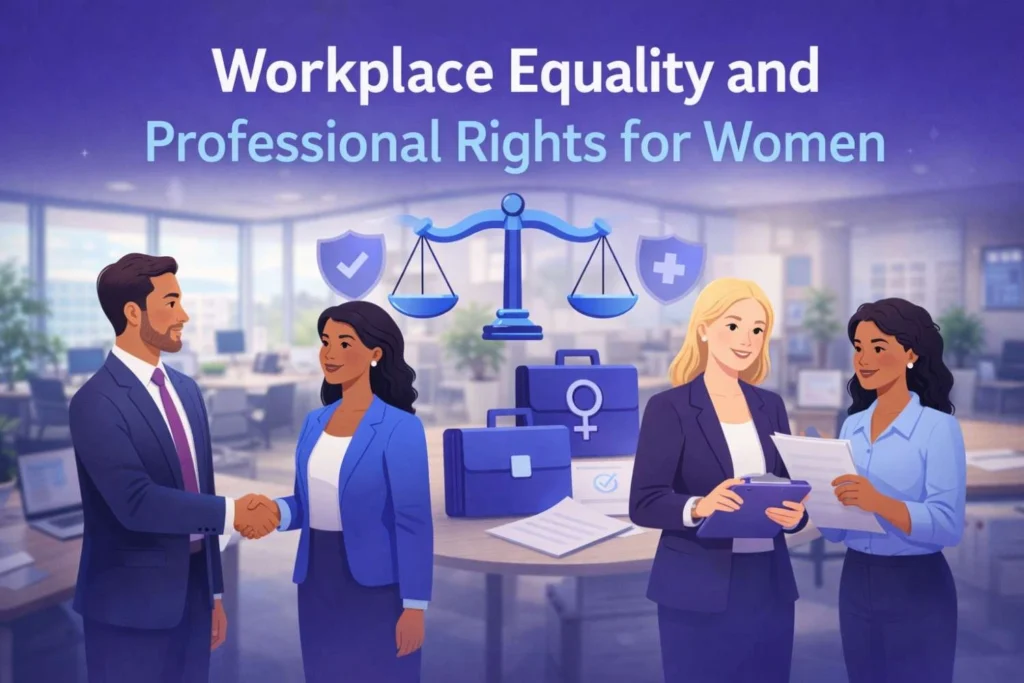
One of the most impactful reforms relates to gender pay gap reporting requirements. Companies with more than 250 employees must publicly disclose pay disparities between male and female staff. This transparency encourages organisations to identify and address structural inequalities.
According to the UK Government’s Gender Pay Gap Report, women in the UK still earn around 14% less than men on average across all industries. This data highlights why transparency measures and workplace equality policies remain essential for improving long-term gender equity in employment.
Professional equity is also linked to leadership opportunities. Many organisations now track female leadership representation as a key performance indicator within their diversity strategy. Increasing the number of women in executive roles helps break the persistent glass ceiling and career progression barriers that still exist in many industries.
Flexible work policies have also evolved significantly. Under updated legislation, employees now have stronger flexible working request rights 2024, allowing them to request remote work arrangements, adjusted schedules, or compressed working weeks. These rights are particularly beneficial for women balancing professional responsibilities with caregiving roles.
Despite progress, legal compliance alone is not enough to create a truly inclusive workplace. Businesses that actively promote equity tend to focus on long-term culture change. That includes mentorship programs, leadership development, and policies designed to ensure every employee has equal opportunities to succeed.
Legal Duties and Employer Responsibility Under UK Law
Employers carry a clear legal responsibility to uphold the rights of women through safe, fair, and supportive workplace environments.
A key element of this responsibility is the duty of care for female employees, which requires organisations to prevent harm, stress, or discrimination that could negatively affect workers’ wellbeing.
For example, when workplace pressure leads to burnout or psychological injury, employers must demonstrate that reasonable steps were taken to protect staff. Organisations often review their policies alongside resources such as Employers’ Duty of Care for Workplace Stress UK, which explains how businesses can meet their legal obligations.
The law also requires employers to implement practical adjustments when employees experience health challenges. These accommodations may include flexible scheduling, reduced workloads, or specialised support. HR departments often rely on professional assessments like Occupational Health Assessment UK (2026) to identify appropriate workplace adjustments.
Beyond compliance, forward-thinking companies recognise that protecting employee wellbeing is closely connected to organisational performance. When staff feel safe and supported, productivity, retention, and engagement all improve.
Health and Wellness Rights for Women at Work
A significant portion of the rights of women UK focuses on health-related protections. These rights acknowledge that women may experience unique health needs that require workplace understanding and accommodation.
Menopause and Workplace Adjustments
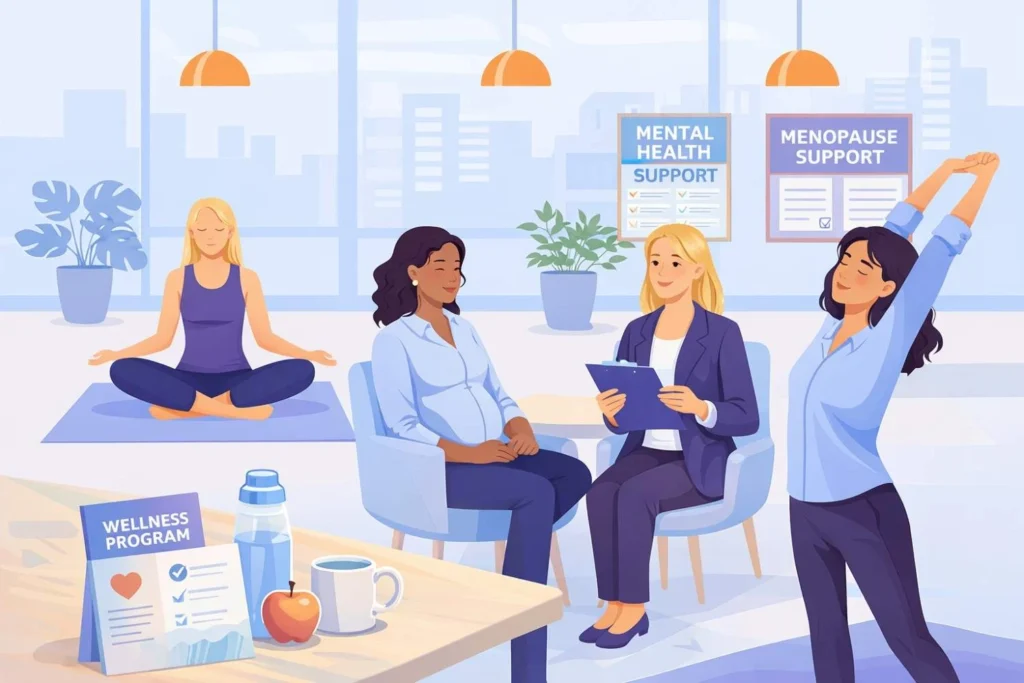
One area receiving growing attention is menopause workplace adjustments. Many UK employers are introducing formal support systems, recognising that menopausal symptoms can affect concentration, comfort, and productivity.
Adjustments may include:
- Temperature control options
- Flexible scheduling
- Access to quiet spaces
These measures help ensure employees can remain productive while managing health changes.
Menstrual and Reproductive Health Support
Similarly, organisations are increasingly introducing a menstrual health policy UK to address the needs of employees experiencing severe menstrual symptoms or related medical conditions.
Workplace policies also recognise reproductive health rights at work, ensuring women undergoing fertility treatment or pregnancy-related care receive appropriate flexibility and protection.
Supporting Mental Health for Working Mothers
Returning to work after childbirth can present emotional and psychological challenges. Many organisations now provide mental health support for working mothers, including counselling services, phased return-to-work programs, and peer support networks.
These initiatives align with the broader concept of workplace wellness for women, which focuses on long-term health rather than short-term compliance.
Businesses seeking deeper insight into mental wellbeing resources often explore guides such as Comprehensive Guide to Employee Mental Health Resources in the UK, which outlines evidence-based approaches to supporting staff.
Government initiatives also play a role. Programs explained in the Access to Work Mental Health Support UK Guide help employees access funded workplace adjustments when mental health conditions affect their work.
Safety, Respect, and Psychological Security in the Workplace
Another critical dimension of the rights of women concerns workplace safety and protection from harassment.
The Worker Protection Act (Sexual Harassment) introduced stricter obligations for employers to prevent harassment before it occurs. Companies must now demonstrate proactive steps such as training programs, reporting systems, and clear policies.
Beyond physical safety, organisations must also promote psychological safety for women, ensuring employees feel comfortable speaking up about concerns without fear of retaliation.
To achieve this, businesses are encouraged to implement safe reporting mechanisms that allow staff to confidentially report harassment, discrimination, or misconduct.
These systems often work alongside formal dignity at work policies, which outline acceptable behaviour and disciplinary procedures when workplace standards are violated.
When these safeguards are implemented effectively, organisations not only protect employees but also strengthen trust and organisational culture.
Practical Wellness Solutions That Strengthen Women’s Workplace Rights
While legislation provides the foundation, practical implementation is what truly protects the rights of women uk inside organisations.
Modern HR leaders increasingly integrate wellness frameworks into their compliance strategies. A comprehensive overview can be found in Your Guide to Workplace Wellbeing in the UK, which explains how structured wellness initiatives support legal compliance while improving employee engagement.
One particularly effective tool is a structured wellbeing strategy that empowers employees to address workplace stress early. Programs such as How a Wellness Action Plan Reduces Stress Leave UK demonstrate how preventative support can reduce absenteeism and improve productivity.
These initiatives also reinforce broader organisational goals around advancing women’s rights in corporate wellness, helping businesses move from reactive compliance toward proactive cultural transformation.
Organisations that want to move beyond compliance and build truly supportive workplaces can implement structured wellness strategies designed specifically to support female employees’ health, productivity, and long-term wellbeing.
Explore Corporate Wellness Solutions
Why Women’s Legal Rights Matter for the Future of UK Workplaces
Protecting women’s workplace rights is not only a legal responsibility—it is also a strategic investment.
Research consistently shows that companies with strong gender equality policies perform better across key indicators including employee satisfaction, innovation, and financial performance.
Organisations that actively uphold statutory rights for female professionals are more likely to attract diverse talent and maintain long-term workforce stability.
At the same time, clear UK employment law for women ensures that businesses operate within fair and transparent frameworks that protect both employees and employers.
When these legal protections combine with supportive workplace culture, organisations create environments where women can thrive professionally while maintaining their health and wellbeing.
Frequently Asked Questions About the Rights of Women in the UK
What legal protections support women in the UK workplace?
UK law protects women primarily through the Equality Act 2010, which prohibits discrimination based on sex, pregnancy, or maternity. Additional employment legislation also supports fair pay, workplace safety, and flexible working rights.
Do women have special workplace health protections?
Yes. UK employment law recognises health needs such as maternity care, menopause support, and mental health accommodations, allowing employees to request reasonable workplace adjustments.
Can women challenge workplace discrimination legally?
Absolutely. Employees who experience discrimination can pursue claims through employment tribunals, and legal protections ensure they cannot be punished for raising concerns.
Are employers required to prevent sexual harassment?
Yes. Under recent legislation, employers must actively take reasonable steps to prevent workplace harassment and provide safe reporting channels for employees.
Build a Workplace That Truly Supports Women
Understanding the rights of women is the first step toward creating safer, healthier, and more equitable workplaces.
However, organisations that want to lead in modern employment practices go beyond legal compliance. They implement wellness programs, inclusive policies, and supportive environments that empower every employee to succeed.
Spark Your Health works with UK organisations to design workplace wellbeing strategies that protect employee rights while improving organisational performance.
If your company wants to strengthen compliance while supporting women’s health and workplace equality, contact the Spark Your Health team today at info@sparkyourhealth.co.uk or call 0843 289 3468 to discover how tailored wellbeing solutions can transform your workplace.