
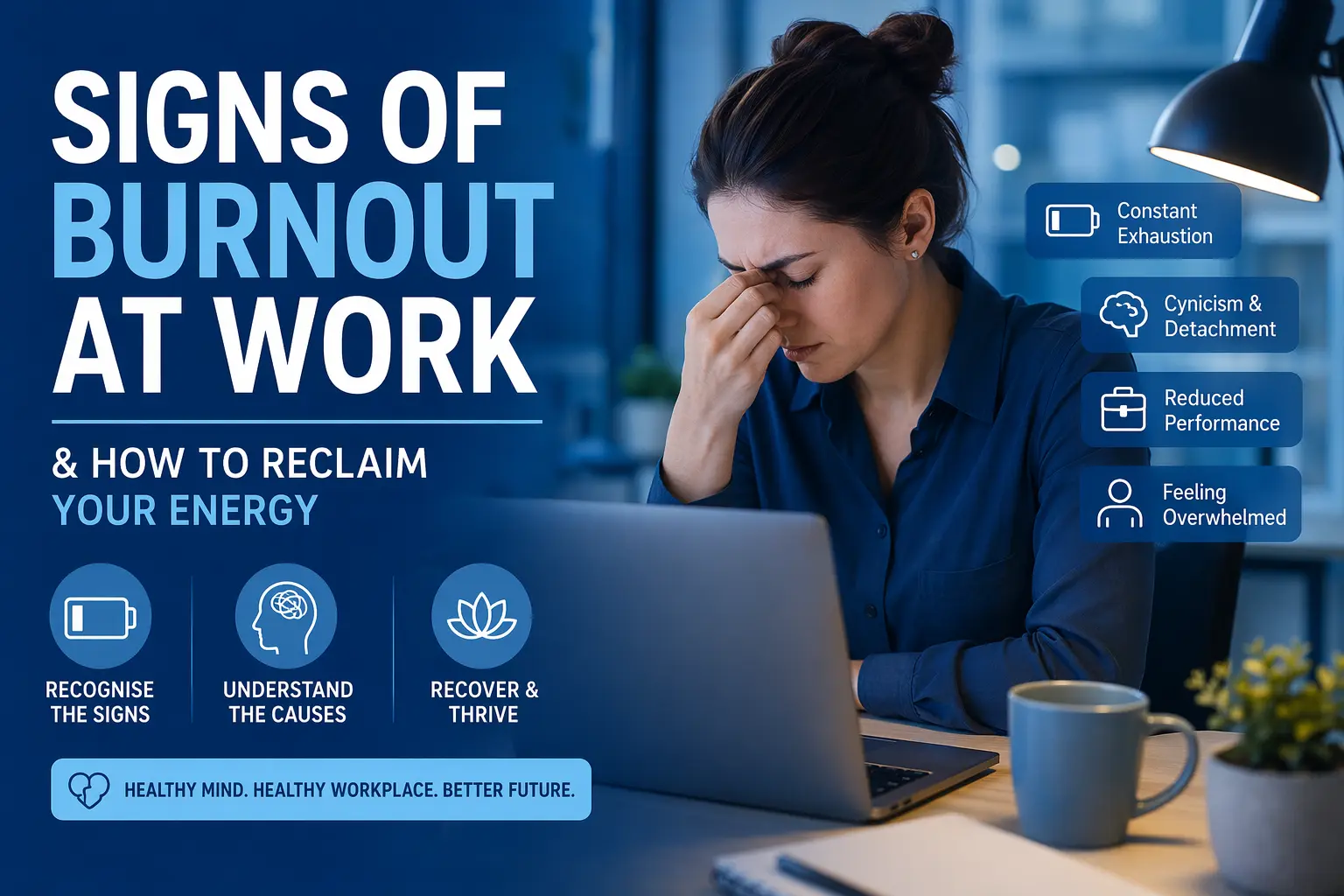
Quick answer: Burnout at work is a state of chronic occupational stress that leads to emotional exhaustion, reduced professional efficacy, and growing detachment from your role. Unlike everyday stress, it doesn’t go away after a good night’s sleep. The good news? Identifying it early and accessing the right support — from a structured corporate wellbeing programme to self-care habits — can help you fully recover.
Is your team showing early warning signs?
Spark Your Health works with UK businesses to create psychologically safe, high-performing workplaces. Get in touch today — our specialists are ready to help.
Call: 0843 289 3468
Email: info@sparkyourhealth.co.uk
Let’s be honest: feeling exhausted at the end of a long week is completely normal. But when that exhaustion follows you into the weekend, when Sunday evenings fill you with dread, and when even small tasks feel impossible — something more serious may be happening. You could be experiencing workplace burnout, and you are far from alone.
According to the Mental Health Foundation, work-related stress, anxiety, and depression account for over half of all working days lost in the UK each year. A 2023 Gallup report found that nearly 76% of employees experience burnout on the job at least sometimes. These are not just statistics — they represent real people, real careers, and real lives being quietly eroded by a problem that is too often dismissed as simply “working hard.”
This guide will help you identify the signs of burnout at work before they escalate, understand why they happen, and — most importantly — take confident steps toward recovery.
What Is Workplace Burnout? (And Why It Isn’t a Character Flaw)
The World Health Organisation officially classifies burnout as an occupational phenomenon — not a medical condition, but a serious consequence of unmanaged workplace stress. It is defined by three core dimensions: a persistent feeling of chronic fatigue and energy depletion, increased mental distance from one’s job, and a measurable decline in professional output.
That last point matters enormously. Burnout isn’t about being lazy, weak, or uncommitted. It is, in fact, far more common among the most dedicated and conscientious workers — those who care deeply, push themselves hardest, and are least likely to ask for help. Recognising this reframes the entire conversation, both for individuals and for the UK employers and HR teams responsible for their people’s wellbeing.
The Physical Signs of Burnout at Work You Shouldn’t Ignore
The body often signals burnout before the mind fully acknowledges it. Physical symptoms appear gradually and are frequently misattributed to other causes — aging, poor diet, seasonal illness — when they are actually the body’s response to chronic occupational stress.
Common physical signs include persistent headaches that don’t respond to typical remedies, recurring sleep disturbances (either difficulty falling asleep or waking up exhausted despite a full night’s rest), digestive issues such as nausea or irritable bowel flare-ups, frequent infections due to a suppressed immune system, and a heavy, physical fatigue that rest simply does not resolve. This is not ordinary tiredness. It is the physiological cost of sustained high-alert functioning without adequate recovery.
Research published in the Journal of Occupational Health Psychology found that individuals with high burnout scores were significantly more likely to report cardiovascular issues over a five-year period — a stark reminder that supporting healthy body, healthy mind principles in the workplace is not a wellness luxury, it is a business necessity.
The Emotional and Psychological Warning Signs
While physical signs are tangible, the emotional presentation of burnout is often what causes the most disruption — both personally and professionally.
Emotional exhaustion in the workplace
This is the hallmark of burnout: a profound emotional depletion that leaves a person feeling hollow and unable to engage, even in things they once cared about. It goes beyond feeling “a bit fed up.” It is a genuine emptiness — the emotional equivalent of running on fumes — that makes even a routine team meeting feel overwhelming.
Cynicism, irritability, and growing detachment
One of the most telling signs is a shift in attitude. A previously enthusiastic employee begins to disengage, becomes cynical about the company’s direction, and shows increased irritability toward colleagues. This isn’t poor behaviour — it’s a defence mechanism. The mind creates distance to protect itself from a situation it can no longer endure. Managers who notice this pattern should understand that what can look like a bad attitude may actually be a cry for support. Our guide on how to manage difficult behaviour at work explores in depth.
Reduced professional efficacy
People experiencing burnout frequently report feeling incompetent — unable to complete work they previously handled with ease. This isn’t a skill deficit; it’s cognitive fatigue masquerading as inadequacy. Decision-making slows, creativity vanishes, and the simplest tasks become strangely difficult. Left unaddressed, this decline in output feeds a damaging cycle of guilt and further exhaustion.
| 76% of employees experience burnout at least sometimes (Gallup, 2023) | £56bn annual cost of poor mental health to UK employers (Deloitte, 2022) | 50%+ of working days lost in UK due to work-related stress (Mental Health Foundation) |
Burnout vs. Stress: Understanding the Critical Difference
One of the most common misconceptions is that burnout and stress are the same thing. They are not — and treating them identically leads to failed recovery attempts.
| Workplace stress Characterised by urgency and over-engagement. Too much pressure, too many demands. The person still feels they can push through. Stress often resolves when the pressure lifts. | Burnout Characterised by disengagement and emptiness. The pressure has been sustained so long that motivation and energy are gone. Rest alone rarely resolves it without structural change. |
Think of stress as driving with the accelerator pressed too hard. Burnout is when you run completely out of fuel. You need to stop, refuel, and examine why the tank emptied so quickly — not simply remove your foot from the pedal.
Why Does Burnout Happen? Common Causes in UK Workplaces
Understanding the causes is essential for both individuals and organisations. Burnout rarely has a single trigger — it emerges from an accumulation of compounding pressures.
Unmanageable workloads sit at the top of every survey. When employees consistently face more work than time allows, with no prospect of relief, the sustained overload becomes a physiological stressor. This environment also breeds the increasingly recognised phenomenon of “quiet quitting” — where employees disengage not from laziness, but from a rational self-preservation response to unsustainable demands.
A lack of control or resources at work is equally damaging. When people cannot influence their schedules, working methods, or access the tools they need to succeed, helplessness sets in — a known psychological precursor to burnout. Similarly, toxic workplace culture — characterised by poor communication, lack of recognition, unfair treatment, and absent psychological safety — creates the chronic low-level stress that slowly depletes even the most resilient individuals.
Poor work-life balance boundaries, particularly since the expansion of remote and hybrid working, mean that many UK professionals now carry their work into every corner of their home and personal life — with no clear signal that the working day has ended.
A Particular Challenge: Digital Burnout and Remote Workers
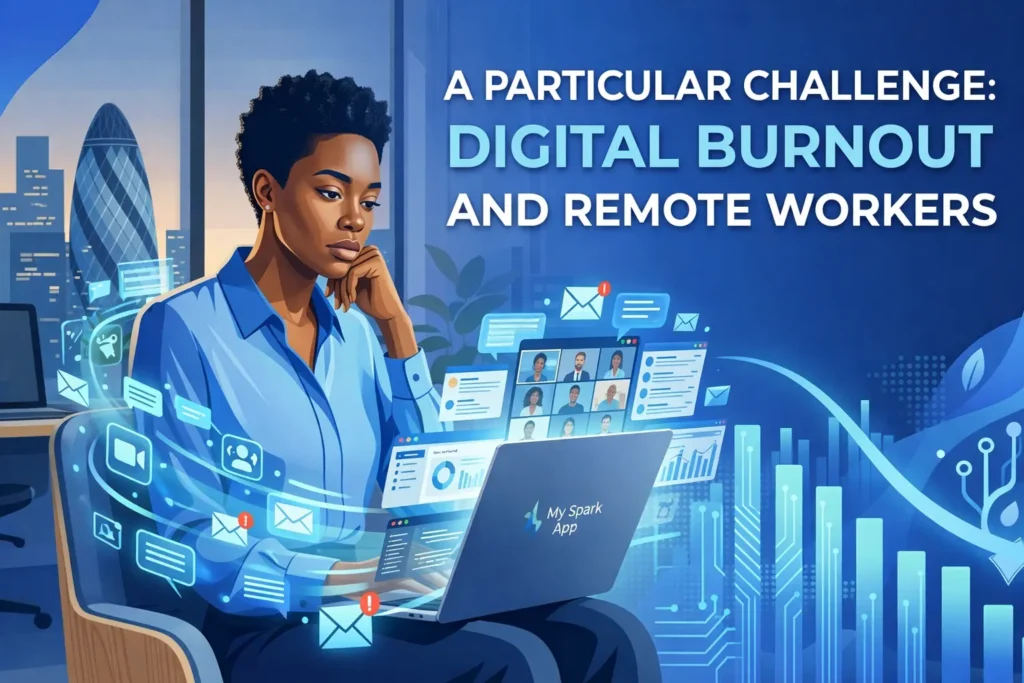
The shift to hybrid and home-based working has created a specific subset of burnout that deserves its own attention. Without the natural rhythms of an office — the commute, the lunch break, the physical separation of spaces — remote workers often find themselves working longer hours, attending more video calls, and finding it far harder to “switch off.” Notification fatigue, screen overload, and the blurring of personal and professional space combine to create a uniquely modern form of exhaustion. Businesses supporting remote teams should explore tailored corporate wellness strategies for remote teams as part of their duty of care.
Ready to prevent burnout before it takes hold?
Explore how the My Spark App helps employees track their wellbeing daily — giving managers the early-warning data they need to act. Talk to our team today.
Call us: 0843 289 3468 | info@sparkyourhealth.co.uk
Burnout Recovery Strategies: Practical Steps That Actually Work
Recovery from burnout is not a weekend project — it is a structured, intentional process. The following strategies are grounded in occupational psychology and are consistently recommended by mental health professionals working within UK workplace settings.
1. Acknowledge it — without judgement
The first step is the hardest: accepting that you are burnt out, and that this is not a personal failing. Many high-achieving professionals resist this acknowledgement for months, continuing to push through and making the condition significantly worse. Speaking to a trusted GP or an Employee Assistance Programme (EAP) counsellor is an excellent starting point. EAPs offer confidential, professional support that is entirely separate from your employer — many people are unaware this resource exists or that they are entitled to use it.
2. Establish genuine work-life balance boundaries
Set a firm end time for your working day and protect it. Turn off email notifications after hours. Create a physical and psychological transition ritual — a short walk, a change of clothes, or even a specific playlist — that signals to your brain that work has ended. These may feel trivial, but neuroscience consistently supports the power of environmental cues in regulating the nervous system.
3. Use a Workplace Wellness Action Plan
A structured Wellness Action Plan (WAP) is one of the most effective tools available. Aligned with the UK Health and Safety Executive’s stress risk assessment standards, a WAP is a personalised document that identifies an employee’s wellbeing triggers, preferred support mechanisms, and agreed actions between the individual and their manager. It creates accountability and psychological safety in teams — transforming wellbeing from a vague aspiration into a practical, measurable commitment.
4. Reintroduce physical movement and self-care for professionals
Exercise is one of the most evidence-backed interventions for burnout recovery. Even 20 minutes of moderate movement significantly reduces cortisol levels and improves mood. Our wellbeing exercises guide offers desk-friendly and accessible options designed specifically for busy professionals. Alongside movement, practices like journaling — which research shows reduces rumination and cortisol — can be transformative. Explore journaling for stress and anxiety as a simple, low-barrier daily habit.
5. Seek professional occupational stress management support
Individual self-care has its limits, especially when systemic workplace issues are contributing to burnout. Our stress management support for employees helps individuals and managers develop the skills to manage pressure sustainably — covering communication, boundary setting, workload negotiation, and resilience-building within realistic UK workplace contexts.
What Employers and HR Teams Must Do Now
Burnout is not solely an individual problem — it is frequently a systemic one. Organisations that address burnout at scale see measurable improvements in retention, productivity, and employer brand. The starting point for any HR team or business owner is a formal workplace stress risk assessment, which the UK Health and Safety Executive explicitly requires employers to conduct. This identifies organisational triggers — unrealistic deadlines, management gaps, poor role clarity — before they manifest as individual health crises.
Beyond assessment, embedding workplace mental health support into the culture — not just the policy documents — is what separates genuinely healthy workplaces from those that simply perform wellness. This means training managers to spot early signs, normalising conversations about pressure and workload, and creating structures where employees feel safe raising concerns. An employee wellness programme that is visible, accessible, and actively promoted is one of the highest-return investments a UK business can make in 2024.
Frequently Asked Questions About Burnout at Work
How do I know if I have burnout or just a stressful period?
The key distinction is duration and recovery. Stress linked to a specific project or deadline typically eases once that pressure passes. Burnout persists regardless of circumstances — you feel depleted even during holidays or quieter periods, and your cynicism and exhaustion don’t lift with rest alone.
Can burnout be treated without taking time off work?
In mild-to-moderate cases, yes — particularly with the right structural support in place. A Wellness Action Plan, reduced workload, access to an EAP, and lifestyle adjustments can facilitate recovery while remaining in work. Severe burnout, however, may require a period of signed leave to allow full recovery, and this should be supported compassionately by employers.
What are my rights as an employee in the UK if I’m experiencing burnout?
Under the UK Health and Safety at Work Act 1974, employers have a legal duty to protect the mental health of their employees. This includes conducting stress risk assessments, making reasonable adjustments, and providing access to support. If your employer is failing to meet this duty, you can contact the Health and Safety Executive (HSE) or seek advice from an employment solicitor.
How long does it take to recover from burnout?
Recovery timelines vary widely depending on the severity, duration, and changes made to the contributing factors. Minor burnout may resolve within a few weeks with the right support. More entrenched burnout can take three to twelve months of consistent, supported recovery — which is why early identification of the signs of burnout at work is so critical.
How can I help a colleague who I think is burnt out?
The most powerful first step is simply asking, without pressure or agenda: “I’ve noticed you seem tired lately — how are you actually doing?” Then listen without trying to fix. Signpost them gently to available resources — whether that’s your company’s EAP, an HR conversation, or a trusted manager — and check in again. Your noticing matters more than you know.
Your Workforce Deserves to Thrive — Let’s Make That Happen
Whether you’re an individual recognising the signs of burnout at work for the first time, or an HR leader looking to build a genuinely resilient organisation, Spark Your Health has the tools, programmes, and expertise to help. From our My Spark App for daily wellbeing tracking to fully managed corporate wellbeing programmes, we partner with UK businesses to protect their most important asset — their people.
Request a Free Demo Call Our Team Today
Email: info@sparkyourhealth.co.uk | Phone: 0843 289 3468