
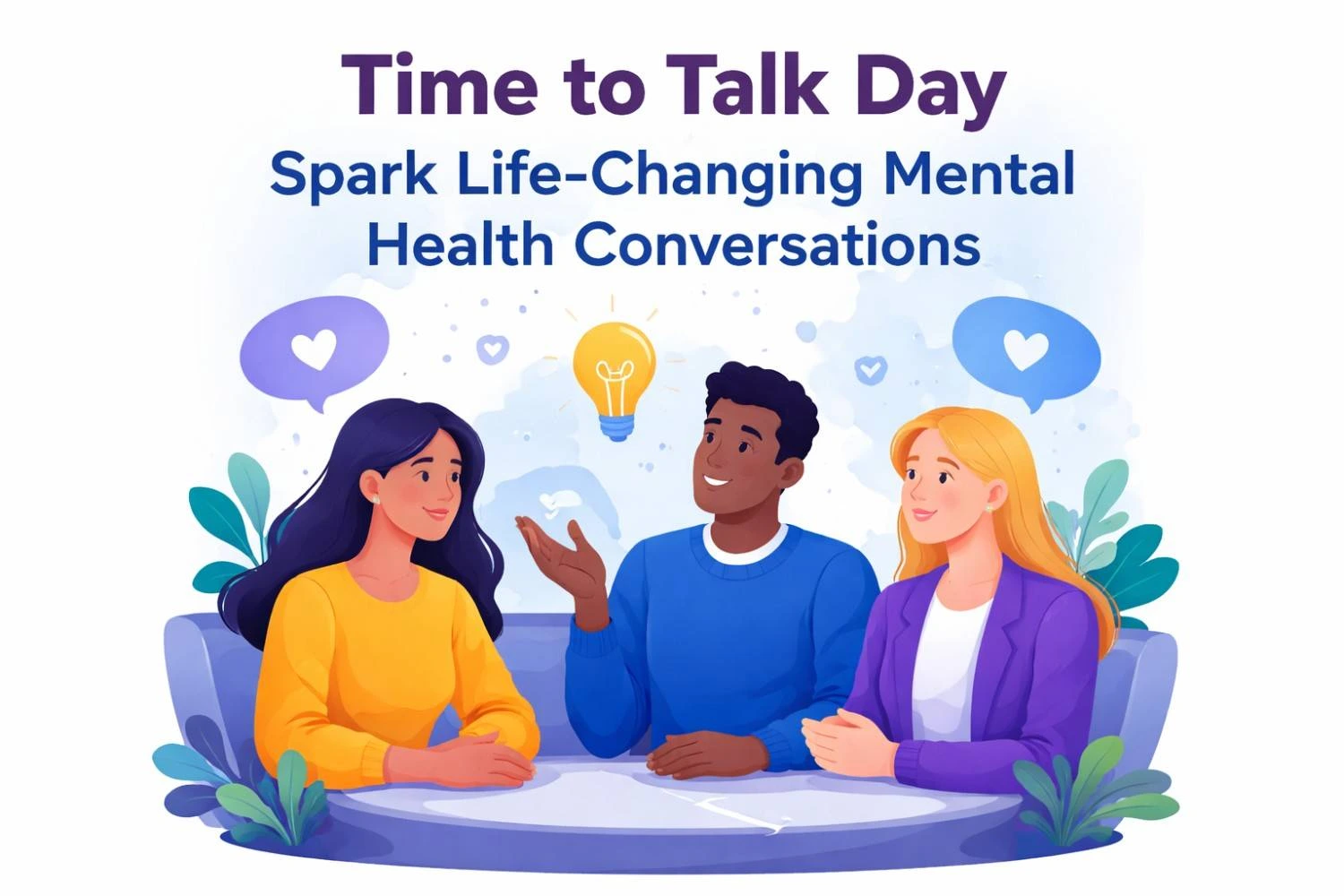
Introduction: The Power of a Single Spark
Nearly two-thirds of people admit they often put on a “brave face”, telling others they are fine even when they are struggling internally. This silent habit fuels isolation and loneliness, making it harder for individuals to seek help when they need it most.
This is exactly why Time to Talk Day has become such an important awareness day in the UK. It reminds us that one honest conversation can change someone’s outlook, strengthen relationships, and even save lives.
At its heart, the idea is simple: small conversations, big impact. A quick check-in with a colleague, a supportive message to a friend, or a meaningful chat with a family member can spark a chain reaction of positive change. These moments strengthen emotional wellbeing, encourage healthier coping habits, and remind people they are not alone.
For organisations and communities alike, sparking the dialogue around mental health is the first step toward building healthier cultures.
Answer (Quick Insight):
Time to Talk Day is a UK campaign encouraging people to start open conversations about mental health. By breaking silence and reducing stigma, it helps individuals feel supported and more willing to seek help when needed.
If your organisation wants to foster open conversations and build healthier teams, Spark Your Health offers structured workplace wellbeing solutions suitable for UK businesses.
For guidance on supporting employee wellbeing, contact our team at info@sparkyourhealth.co.uk.
What is Time to Talk Day?
Time to Talk Day began in 2014 through the Time to Change campaign, an initiative designed to break the cycle of silence surrounding mental health.
Today, the campaign is led by two respected UK charities: Mind and Rethink Mental Illness, supported by a major Co-op partnership that helps extend the campaign’s reach across workplaces, schools, and communities.
The goal is straightforward yet powerful: challenge mental health stigma and discrimination by encouraging everyday conversations.
Each year, the official event takes place on the first Thursday of February. However, the message goes far beyond a single date. The 2026 theme, “Brave the Big Talk,” highlights the importance of continuing these conversations throughout the year.
Many people still believe discussing mental ill-health signals weakness or burden. In reality, open dialogue is a proven way to promote understanding and support.
Campaign organisers emphasise that simply asking someone how they are feeling can open the door to healing. When people talk honestly, they begin exploring coping strategies, connecting with support networks, and taking steps toward recovery.
The Science of Silence vs. The Power of Speech
Why People Stay Silent About Mental Health
Silence around mental health often stems from fear.
Many individuals worry they will be judged, misunderstood, or seen as a burden. This fear fuels mental health stigma, making people reluctant to open up about anxiety, stress, or depression.
However, research consistently shows that talking about emotions provides measurable benefits.
When individuals share their experiences, the brain begins regulating emotional responses. This process improves emotional regulation and reduces the body’s stress hormone, often described as cortisol reduction.
Just as importantly, conversation creates psychological safety — the feeling that it is safe to speak openly without fear of embarrassment or punishment.
In workplaces and communities where psychological safety exists, people are far more likely to share concerns early rather than waiting until problems escalate.
The Hidden Link Between Sleep and Mental Health
Another important topic that often emerges in conversations about mental wellbeing is sleep. Poor sleep patterns are one of the earliest signs of emotional distress. When stress or anxiety increases, the mind struggles to switch off, leading to fatigue, irritability, and reduced concentration.
This is why initiatives like World Sleep Day highlight the strong connection between sleep quality and mental health. Both campaigns encourage people to adopt healthier habits that protect overall wellbeing.
In many cases, when people finally open up about their struggles, they also begin discussing lifestyle challenges such as sleep deprivation, workload pressure, or burnout. Addressing these issues early can significantly improve long-term emotional wellbeing.
Talking openly about sleep, stress, and mental health therefore becomes a powerful extension of the message behind Time to Talk Day.
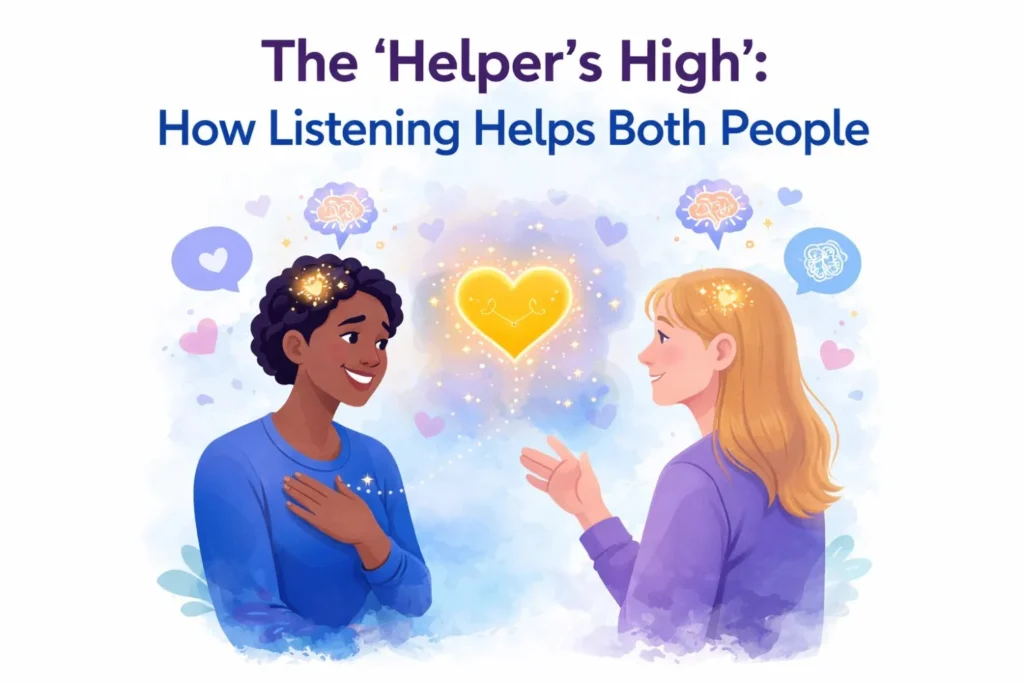
The “Helper’s High”: How Listening Helps Both People
There is also a surprising benefit for the listener.
Psychologists describe something called the “helper’s high.” When we support someone else, our brains release positive neurotransmitters associated with compassion and connection.
Supporting someone through non-judgmental support triggers positive emotional responses in the listener as well. When people feel heard and supported, both participants in the conversation experience a sense of connection and relief.
In other words, talking about mental health helps both people in the conversation.
By encouraging open dialogue, Time to Talk Day helps transform silence into understanding.
How to “Brave the Big Talk”: A Practical Toolkit
Starting a meaningful conversation can feel intimidating. Many people worry they will say the wrong thing.
In reality, the most important factor is simply showing genuine care.
Setting the Scene
Choose an environment that feels comfortable and relaxed. This could be a quiet café, a walk in the park, or even a casual chat during a shared activity.
Creating a safe space helps the other person feel comfortable enough to open up.
Ask Twice
Often, the first answer to “How are you?” is automatic.
Try following up with a gentle question such as:
“How are you really doing?”
This simple technique signals that you genuinely want to listen.
Practice Active Listening
Active listening means giving someone your full attention rather than planning your response while they speak.
The L-E-A-P approach works well:
- Listen without interrupting
- Empathize with their emotions
- Ask thoughtful questions
- Paraphrase to confirm understanding
This approach encourages non-judgmental support, helping people feel validated instead of criticised.
Conversation Starters to Spark a Chat
Sometimes people simply need the right opening line. These gentle conversation starters can make a big difference:
- “I noticed you’ve seemed a bit quiet lately—how are things going?”
- “Want to take a short walk and talk?”
- “Work has been intense recently. How are you handling everything?”
- “If something’s on your mind, I’m here to listen.”
- “What’s been the most challenging part of your week?”
Using open-ended questions like these encourages deeper conversation rather than simple yes-or-no answers.
Navigating the Workplace: More Than Just a Hashtag
Work environments play a major role in mental wellbeing.
In the UK, workplace stress, anxiety, and depression account for over half of all work-related ill health.
Yet many employees hesitate to speak openly about mental health concerns due to fears about career consequences.
Why Workplace Conversations Matter
Encouraging open conversations at work improves both wellbeing and performance.
Supportive workplaces often see:
- Higher employee retention
- Greater engagement
- Lower absenteeism
Studies suggest that strong wellbeing cultures can reduce staff turnover by up to 30%.
Manager Training and Leadership Vulnerability
Managers play a key role in creating supportive environments.
Effective manager training helps leaders recognise signs of emotional distress and respond with empathy.
When leaders model openness about challenges, they reduce workplace stigma and encourage employees to speak honestly.
Everyday Moments Matter
Encouraging employees to Brave the Big Talk during everyday interactions can make a powerful difference.
Simple moments such as coffee breaks or walking meetings provide natural opportunities to check in.
Organisations looking to strengthen employee support often implement Corporate Wellbeing Programs designed to embed mental health support into company culture.
You can explore structured support systems such as Workplace Wellness Hubs, which help organisations create healthier, more productive environments.
Supporting the Next Generation: Youth and Teens
Mental health conversations are especially important for young people.
Research shows that over half of mental health conditions begin before age 14, highlighting the importance of early intervention.
Young adults aged 18–24 report the highest levels of anxiety compared with other age groups.
Why Youth Conversations Matter
Young people face unique pressures, including academic stress and social media expectations.
These pressures often encourage them to maintain a brave face, hiding their struggles behind curated online identities.
Practical Tips for Parents and Mentors
Parents and educators can support young people by encouraging honest discussions.
Instead of asking “How was your day?” try questions that invite reflection.
For example:
- “What was the best and most challenging part of your day?”
- “Is there anything worrying you at the moment?”
This approach builds emotional resilience, helping young people understand and express their feelings more effectively.
Another helpful method is the trauma-informed perspective, shifting conversations from “What’s wrong with you?” to “What happened to you?”
This subtle change promotes empathy and understanding.
Youth mental health awareness initiatives, including Children’s Mental Health Week, continue to highlight the importance of early support.
Alongside open conversations, encouraging positive daily routines can also improve mental wellbeing. Activities that promote reflection, relaxation, and movement can strengthen emotional balance. Helpful guides such as Wellbeing Exercisesfor a Healthier Mind & Body or Modern Wellbeing Activities offer practical ideas that individuals and families can integrate into everyday life.
When Someone Opens Up: How to Respond
When someone shares their struggles, your reaction matters greatly.
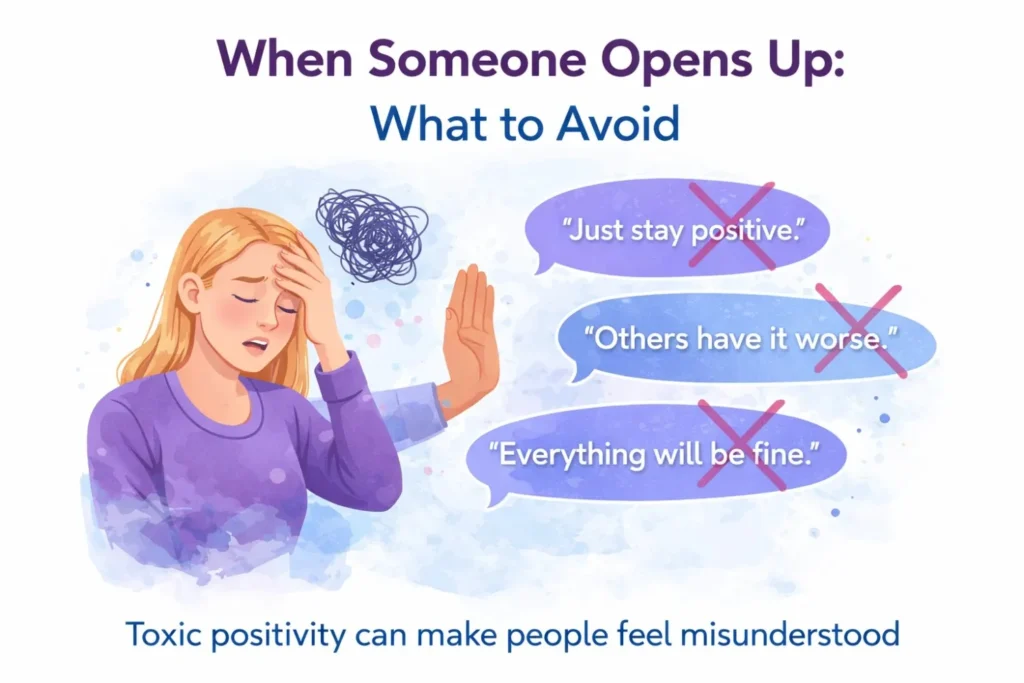
What to Avoid
Certain responses, even when well-intended, can feel dismissive.
Avoid phrases like:
- “Just stay positive.”
- “Others have it worse.”
- “Everything will be fine.”
These examples of toxic positivity can make people feel misunderstood.
What Helps Instead
A supportive response focuses on empathy and presence.
- Validate their feelings
- Acknowledge their courage in speaking up
- Avoid rushing to solve the problem immediately
Sometimes, the most helpful action is simply listening without judgment.
Protecting Your Own Boundaries
Supporting others is important, but it is also essential to recognise your limits.
Encouraging professional help when needed ensures the person receives appropriate support.
Professional Resources: Where to Go Next
If someone needs professional help, several trusted UK services are available.
- NHS 111 or NHS Talking Therapies
- Samaritans – 116 123
- Shout – Text 85258
- Mind’s Infoline
These organisations provide confidential guidance and support for people experiencing emotional distress.
Keep the Spark Alive: Small Talks, Big Change
A single conversation can transform someone’s day—or even their life.
Time to Talk Day reminds us that mental health support does not require grand gestures. Often, the most powerful action is simply asking someone how they are feeling and truly listening.
When individuals, workplaces, and communities commit to healthier habits of open dialogue, they build stronger support networks and a culture where it’s okay not to be okay.
Start Your Organisation’s Wellbeing Journey
Creating open conversations at work requires more than good intentions. It requires structure, leadership support, and expert guidance.
Spark Your Health helps UK organisations implement practical wellbeing strategies that empower employees and leaders alike.
| Explore Corporate Wellbeing Solutions https://sparkyourhealth.co.uk/corporate-solution/ |
Or speak with our team directly to design a tailored wellbeing programme for your organisation.
Email: info@sparkyourhealth.co.uk
Frequently Asked Questions (FAQ)
Is Time to Talk Day held every year?
Yes. The campaign takes place annually on the first Thursday of February, encouraging people across the UK to start conversations about mental health.
Why are conversations about mental health important?
Open dialogue reduces stigma, encourages people to seek help earlier, and strengthens relationships in workplaces, families, and communities.
How can workplaces support mental health conversations?
Companies can introduce wellbeing policies, leadership training, and internal support networks that promote psychological safety and open communication.
What if someone doesn’t want to talk?
Respect their boundaries. Let them know you are available whenever they feel ready. Consistent support builds trust over time.