
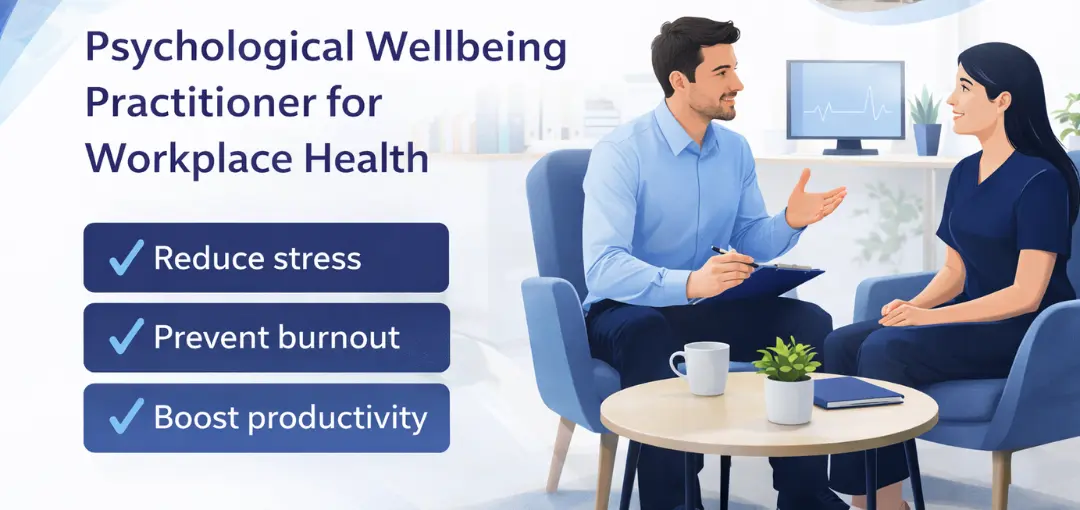
Workplace mental health is one of the most pressing challenges facing UK organisations today. Rising absenteeism, stress-related performance dips, and burnout are costing businesses billions every year. Employees may not exhibit severe mental illness, but many experience mild-to-moderate mental health concerns that quietly reduce engagement, focus, and overall productivity.
This is where a Psychological Wellbeing Practitioner (PWP) becomes a game-changer. Unlike traditional therapy, which often focuses on long-term treatment, a PWP provides early intervention, structured guidance, and practical strategies. They help employees manage stress, anxiety, and emotional challenges before issues escalate, bridging the gap between wellness awareness and real-life support.
If your organisation wants to create a proactive wellbeing culture, Spark Your Health offers expert guidance and digital tools designed to make professional support accessible and actionable.
Quick Answer: What Does a Psychological Wellbeing Practitioner Do?
A mental Wellbeing Practitioner helps employees tackle common mental health challenges using structured, evidence-based techniques grounded in cognitive behavioural principles. They focus on guided self-help and practical strategies employees can implement immediately.
Typically, PWPs support staff experiencing work-related stress, mild-to-moderate anxiety, panic symptoms, low mood, sleep disruption, or early signs of burnout. Their interventions are short-term but highly structured, designed to provide tangible improvements in wellbeing and resilience.
Support Your Workforce with Evidence-Based Wellbeing
If your organisation wants to build a proactive mental health culture, Spark Your Health provides expert guidance and digital solutions designed to support modern workplaces.
Email: info@sparkyourhealth.co.uk
Phone: 0843 289 3468
What is a Psychological Wellbeing Practitioner?
A Psychological Wellbeing Practitioner is a trained mental health practitioner who delivers structured support for common mental health conditions through the UK’s IAPT (Improving Access to Psychological Therapies) programme.
Their work is grounded in evidence-based interventions and is often integrated within primary care services across the UK.
Instead of delivering intensive psychotherapy, PWPs focus on helping individuals develop practical coping strategies through structured sessions.
The Role of Low-Intensity CBT
A cornerstone of PWP practice is Low-intensity CBT, which equips employees with tools to understand thought patterns, manage stress, and respond effectively to emotional triggers.
For instance, an employee struggling with deadline-related anxiety can learn to restructure negative thinking, gradually reduce panic symptoms, and improve concentration. These strategies complement broader Stress Management for Employees programmes, reinforcing long-term resilience while preventing absenteeism.
By focusing on self-management, low-intensity CBT ensures interventions are efficient and scalable, leaving high-intensity psychotherapy for complex or severe mental health conditions.
Why Your Team Needs PWP-Led Support
Many organisations invest in wellness initiatives but still struggle with real outcomes. Workshops and mindfulness apps often raise awareness, but they rarely provide structured support when employees are already struggling.
A Wellbeing Practitioner fills this critical gap.
They provide targeted guidance that helps employees manage challenges early, preventing them from developing into more serious issues.
Business Benefits of Early Mental Health Intervention
When integrated into a corporate mental health support strategy, PWPs help organisations achieve measurable outcomes:
- Reduced sickness absence
- Improved productivity and concentration
- Stronger employee engagement
- Lower turnover rates
They also complement existing employee assistance programs (EAP) by providing structured support that employees can access quickly.
Many HR leaders now recognise that effective workplace burnout prevention requires professional guidance rather than reactive solutions.
PWPs can also work alongside occupational health support teams to ensure employees receive the right level of care.
For organisations conducting a Workplace Stress Risk Assessment, PWP guidance can be especially valuable in addressing identified risks before they affect team performance.
If you want to understand the broader framework behind employee wellbeing initiatives, this guide on What is Wellbeing in the Workplace UK? explains the evolving landscape of corporate wellness strategies.
Conditions a PWP Can Effectively Manage
One of the strengths of a Psychological Wellbeing Practitioner is their ability to address the most common mental health challenges affecting employees today.
These conditions often remain hidden in workplaces but significantly influence productivity and morale.
1. Anxiety and Panic Symptoms
Many professionals experience mild-to-moderate anxiety related to deadlines, performance expectations, or workplace pressures.
Structured support helps individuals recognise triggers and build healthier coping responses.
PWPs also assist employees dealing with panic disorder, teaching techniques that help regulate physical stress reactions.
For organisations exploring these challenges further, understanding Social Anxiety Symptoms can help identify employees who may benefit from early support.
2. Depression and Low Motivation
Low mood and disengagement often appear as reduced productivity or absenteeism.
A PWP can support employees through structured depression treatment techniques designed to improve motivation, behavioural activation, and daily routines.
These practical methods help individuals rebuild momentum in both personal and professional environments.
3. Sleep Problems and Energy Management
Poor sleep is one of the most overlooked productivity barriers.
Through practical sleep hygiene strategies, PWPs guide employees in creating healthier routines that improve concentration, decision-making, and emotional resilience.
Better sleep patterns often lead to significant improvements in workplace performance.
4. Phobias and Stress-Related Avoidance
Certain workplace situations can trigger intense fear responses.
PWPs provide structured support for phobias, helping individuals gradually rebuild confidence and reduce avoidance behaviours that may affect their work responsibilities.
5. Obsessive Behaviour Patterns
Early intervention also helps employees struggling with repetitive thoughts or behaviours linked to OCD management strategies.
In some cases, practitioners may identify overlaps with neurodevelopmental conditions. For deeper insights, this resource on Obsessive-Compulsive Disorder and ADHD explains how these challenges sometimes intersect in workplace environments.
How PWPs Use Digital Tools to Support Employees
Modern workplace wellbeing programmes increasingly combine human expertise with technology.

A Psychological Wellbeing Practitioner may integrate digital mental health tools to enhance support between sessions.
These tools often include:
- Structured mood tracking apps
- Guided journaling exercises
- Interactive CBT exercises
Many platforms provide CBT-based self-help resources that employees can access anytime.
This approach creates accessible mental health support that continues beyond scheduled sessions.
For employees exploring digital options independently, this guide on Are There Any Free Anxiety Apps? provides useful recommendations.
Spark Your Health integrates these digital insights with professional wellbeing expertise, helping organisations build scalable support systems for their workforce.
Implementing PWP Support in Your Organisation
Introducing a Psychological Wellbeing Practitioner into your corporate wellness strategy does not require a complete restructuring of existing programmes.
Instead, it enhances the effectiveness of current initiatives.
Step 1: Assess Workplace Mental Health Risks
The first step is understanding where employees may be struggling.
Tools such as a Workplace Stress Risk Assessment help organisations identify departments or roles where mental health pressures are most significant.
Step 2: Integrate Support into Corporate Wellbeing Programs
Once risks are identified, organisations can embed PWP guidance within Corporate Wellbeing Programs to provide proactive support.
This may include:
- Structured employee consultations
- Practical coping workshops
- Wellbeing education sessions
Step 3: Combine Clinical Guidance with Digital Resources
A blended approach allows employees to access support in different ways.
PWPs may recommend digital tools alongside coaching sessions, enabling employees to track progress and build healthy habits over time.
This combination ensures support remains consistent, flexible, and scalable across large teams.
PWP vs Occupational Health: Understanding the Difference
One common question HR managers ask is whether they need occupational health services or PWP support.
Both play important roles but serve different functions.
A Mental Wellbeing Practitioner provides structured mental health support and practical interventions.
Occupational health professionals, on the other hand, assess an employee’s ability to work and provide recommendations to employers.
If you want to explore this topic further, these resources provide valuable insight:
Understanding this distinction helps organisations create more effective support systems for employees.
Building a Mental Health Culture at Work
Improving employee wellbeing requires more than isolated initiatives.
It involves building a culture where conversations about mental health are normal and supported.
PWPs often play a key role in awareness campaigns and wellbeing workshops.
For example, organisations can use events like Time to Talk Day to encourage open discussions about mental health while providing practical resources employees can access year-round.
This combination of education, support, and professional guidance creates a healthier workplace environment.
Why Businesses Are Investing in Psychological Wellbeing Practitioners
Across the UK, forward-thinking companies are recognising that mental health support is no longer optional.
Employees expect workplaces to prioritise wellbeing just as seriously as productivity.
By integrating a Wellbeing Practitioner, organisations gain access to structured expertise that supports both employees and business performance.
The result is a workplace culture built on resilience, support, and long-term wellbeing.
Frequently Asked Questions
What qualifications does a Psychological Wellbeing Practitioner have?
PWPs typically complete accredited training through the IAPT programme, equipping them with specialist skills in cognitive behavioural approaches and structured mental health interventions.
Can a PWP help with workplace stress?
Yes. PWPs are specifically trained to support employees dealing with stress, anxiety, and emotional challenges related to work environments.
How is a PWP different from a therapist?
While therapists often provide long-term psychotherapy, PWPs focus on short-term, structured interventions that help individuals develop practical coping strategies.
Are PWP services suitable for businesses?
Absolutely. Many UK organisations integrate PWPs into their employee wellbeing strategies to reduce absenteeism and support workforce resilience.
Ready to Strengthen Your Workplace Wellbeing Strategy?
Supporting employee mental health requires more than awareness campaigns.
It requires structured, professional guidance that helps individuals develop real coping skills.
A Psychological Wellbeing Practitioner provides exactly that—evidence-based support designed to improve both employee wellbeing and organisational performance.
Spark Your Health helps organisations combine professional expertise with digital wellbeing tools to create sustainable mental health solutions for modern workplaces.
| 👉 Start your business wellbeing journey today: https://sparkyourhealth.co.uk/corporate-solution/ |
Or speak with our team directly:
📧 info@sparkyourhealth.co.uk
📞 0843 289 3468
Your team deserves more than reactive support. With the right strategy in place, workplace wellbeing can become one of your organisation’s greatest strengths.