

Last reviewed: September 2026
Looking for the best apps for stress relief can quickly become overwhelming. Some focus on breathing. Others offer meditation, sleep support, mood tracking or guided exercises for anxious thoughts.
There is no single stress-relief app that is right for everyone. The useful question is: what kind of support do you need, and which app provides it in a way you will realistically use?
This guide compares free and paid stress relief apps available to UK users, explains what each one is useful for, and highlights important points to check before trusting any mental health or wellbeing app.
Quick answer: If you want a completely free meditation app, Medito is a strong option. Insight Timer offers a very large free mindfulness library. Calm and Headspace are useful for structured meditation and sleep support, while Breathwrk focuses on short guided breathing exercises. My Spark combines everyday wellbeing tools with mood, mindfulness and habit support and is also designed for workplace wellbeing.
Best Apps for Stress Relief: Quick Comparison
| App | Useful for | Main approach | Free option? |
|---|---|---|---|
| My Spark | Everyday and workplace wellbeing | Breathing, mindfulness, mood and habit tools | Yes |
| Calm | Stress, relaxation and sleep | Meditation, breathing, sleep audio | Yes, with optional Premium |
| Headspace | Structured mindfulness | Guided meditation, stress and sleep tools | Free trial; subscription for full access |
| Insight Timer | Large choice of free content | Meditation, breathing and sleep | Large free library; optional premium |
| Medito | Completely free meditation | Meditation, breathing and sleep | Yes |
| Breathwrk | Quick breathing exercises | Guided breathwork | Limited free access; paid option |
| Wysa | Guided self-reflection | Conversational self-help and wellbeing exercises | Free and paid services vary |
| Mindfulness Coach | Learning mindfulness step by step | Self-guided mindfulness training | Yes |
App features, subscriptions and free access can change. We checked the information in this guide in September 2026, but it is worth confirming the latest terms before subscribing.
How We Chose the Apps in This Guide
We have not treated popularity or app-store ratings as proof that an app will improve someone’s mental health.
Instead, we looked at practical factors that matter when choosing a digital wellbeing tool:
- what the app is designed to help with;
- whether it is available to UK users;
- what is actually included for free;
- whether paid access or a subscription is required;
- the type of support offered, such as breathing, meditation or mood tracking;
- information provided by the developer about evidence and intended use;
- privacy and personal-data considerations; and
- whether the app clearly explains its limitations.
This approach also reflects 2026 guidance from the Medicines and Healthcare products Regulatory Agency (MHRA), which encourages people to check what a mental health technology claims to do, who it is designed for, what evidence supports it and how personal information is handled.
Best Stress Relief Apps to Consider in 2026
1. My Spark – Everyday and Workplace Wellbeing
Useful for: everyday wellbeing, workplace stress, mood awareness and building healthier routines.
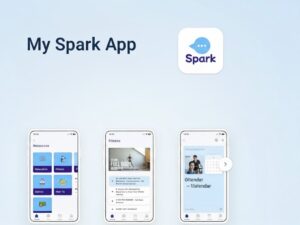
My Spark is the wellbeing app developed by Spark Your Health. It includes practical tools such as breathing exercises, mindfulness, mood journalling and habit tracking.
It is designed around regular wellbeing support rather than diagnosis or clinical treatment. That can make it useful for people who want one place to build small habits rather than only opening an app when they already feel overwhelmed.
Good to know: Spark Your Health publishes this guide and also develops My Spark. We have included it because it fits the subject of this comparison, and we are making that relationship clear so readers can assess it alongside the other options.
If workplace wellbeing is your main concern, you can also read our guide to practising mindfulness at work.
2. Calm – Stress, Relaxation and Sleep
Useful for: guided relaxation, mindfulness and winding down before sleep.
Calm combines guided meditations with breathing exercises, soundscapes and sleep content. Its current free offering includes a substantial library of meditation and sleep resources, while additional content is available through Calm Premium.
It may suit someone who wants several types of relaxation content in the same app rather than focusing only on meditation.
Things to know: not every Calm programme is included in the free version. Check which content is unlocked before deciding whether you need a subscription.
3. Headspace – Structured Guided Mindfulness
Useful for: people who prefer guided sessions and a structured approach.
Headspace offers guided meditations, mindfulness exercises, sleep resources and stress-focused content. Its organised programmes may be useful if you are new to meditation and prefer being guided rather than choosing exercises yourself.
Headspace currently offers previews and a free trial, but full access requires a subscription.
Things to know: it should not be described as a completely free stress relief app. If cost is your priority, compare it with the free options later in this guide.
4. Insight Timer – A Large Free Mindfulness Library
Useful for: people who want plenty of choice without immediately paying for a subscription.
Insight Timer provides a large library covering guided meditation, breathing, sleep, mindfulness and emotional wellbeing. Much of its content can be accessed through a free account, with additional premium features available separately.
The amount of choice can be a strength, although people who prefer a very simple step-by-step programme may find a more structured app easier to start with.
Good fit for: someone who already knows what type of practice they enjoy and wants a wide range of sessions to explore.
5. Medito – A Completely Free Meditation Option
Useful for: meditation, breathing, sleep and stress support without a paid subscription.
Medito is run by the non-profit Medito Foundation. Its current app includes guided meditations, breathing exercises, sleep stories, courses and sessions focused on stress and anxiety.
Medito states that the app is free with no ads or paywalls.
That makes it particularly useful for someone searching specifically for the best free apps for stress relief and who does not want to start a trial that later becomes a paid subscription.
6. Breathwrk – Short Guided Breathing Exercises
Useful for: people who want brief breathing exercises rather than longer meditation sessions.
Breathwrk focuses on guided breathing exercises for situations such as feeling tense, needing to focus or preparing for sleep. This can suit people who find traditional meditation difficult or simply want something they can use in a few minutes.
The app currently has limited free access alongside paid options.
If breathing exercises appeal to you, start gently. There is no need to force deep or rapid breathing to manage everyday stress.
7. Wysa – Guided Reflection and Self-Help Tools
Useful for: people who prefer working through thoughts in a conversational format.
Wysa provides an AI-supported conversational space alongside self-care exercises including mindfulness, breathing, journalling and techniques influenced by cognitive behavioural approaches.
Wysa itself states that its general wellbeing app is designed for self-help and self-monitoring and is not a substitute for professional medical advice, diagnosis or crisis care.
This distinction matters. A conversational app may help you reflect on what you are feeling, but it is not the same as talking with a qualified healthcare professional.
8. Mindfulness Coach – Learn Mindfulness Step by Step
Useful for: people who want a straightforward introduction to mindfulness.
Mindfulness Coach was created by the US Department of Veterans Affairs’ National Center for PTSD. It provides self-guided mindfulness training, educational material, guided exercises, goal setting and progress tracking.
Although originally developed with Veterans and service members in mind, the app is also available for others interested in learning mindfulness.
The developer makes an important limitation clear: the app can be used for education and self-care, but it does not replace professional treatment.
What Are the Best Free Apps for Stress Relief?
If you do not want another monthly subscription, start by separating completely free apps from apps that only offer a trial or limited free content.
- Medito: a strong choice if you want meditation, breathing and sleep content without a premium tier.
- Mindfulness Coach: useful for learning a structured mindfulness practice without a commercial subscription.
- Insight Timer: offers a large amount of free meditation, sleep and mindfulness content, with optional premium features.
- Calm: includes free meditation and sleep content, although some features require Premium.
- My Spark: provides a free individual option with everyday wellbeing tools.
- Headspace: offers previews and a free trial, but ongoing full access is subscription-based.
Always check the latest plan before downloading. App companies can change what is included in free and paid versions.
Which Type of Stress Relief App Might Suit You?
If you need a quick reset during a stressful day
A simple breathing app such as Breathwrk, or a short breathing or mindfulness exercise inside another app, may be easier than starting a long meditation programme.
You can also try the practical techniques in our mindfulness at work guide.
If stress is making it harder to sleep
Calm, Headspace, Insight Timer and Medito all include sleep-related content. The right choice depends on whether you prefer guided meditation, stories, relaxing sounds or a more structured routine.
An app can support a bedtime routine, but persistent sleep difficulties deserve wider attention rather than simply adding more screen time before bed.
If you want to build a regular mindfulness habit
Medito, Headspace, Insight Timer and Mindfulness Coach all provide ways to practise mindfulness regularly.
Start small. Five useful minutes that you repeat regularly may be more realistic than committing to a long session that you rarely complete.
If stress is showing up physically
Stress can affect the body as well as thoughts and mood. Headaches, muscle tension, tiredness, stomach problems and changes in sleep can occur with stress.
However, physical symptoms should not automatically be blamed on stress. Read our guide to the physical signs of stress and when to seek help if you are unsure.
If most of your stress comes from work
A wellbeing app may help you pause, practise breathing or build healthier routines, but it cannot remove an unrealistic workload, poor management, bullying or unclear responsibilities.
The Health and Safety Executive identifies six areas that employers should consider when managing work-related stress: demands, control, support, relationships, role and change.
This means workplace stress should not be treated only as an individual’s responsibility to become better at coping.
If work is a major source of pressure, you may find these Spark resources useful:
- How to Practice Mindfulness at Work
- Employee Assistance Programme UK Guide
- Occupational Health Assessment UK Guide
- How Long Can You Be Signed Off With Stress in the UK?
How to Choose a Stress Relief App
Before downloading several apps, ask yourself a few simple questions.
1. What do I actually want help with?
Is the main issue feeling tense during the day, difficulty sleeping, anxious thoughts, work pressure or building a regular mindfulness habit? Choose an app around that need rather than choosing the one with the most features.
2. What type of activity will I really use?
Some people enjoy guided meditation. Others prefer breathing, journalling or short check-ins. An app only has value if its approach feels realistic for you.
3. Is it really free?
Look carefully at the difference between a free app, a free tier and a free trial. Check when a trial becomes a paid subscription.
4. What information does the app collect?
Mental health and wellbeing apps can collect sensitive information. Read the privacy information before entering details about your mood, health or personal life.
5. What is the app claiming to do?
There is an important difference between an app designed for general wellbeing and technology that claims to diagnose, treat or manage a medical condition.
The MHRA advises UK users to check the intended purpose, evidence, data use and regulatory status of digital mental health technologies before relying on them.
Do Stress Relief Apps Actually Work?
Some of the techniques found inside stress management apps are also used in wider wellbeing guidance. The NHS, for example, discusses approaches such as breathing exercises, planning, physical activity, mindfulness and self-help techniques for managing stress.
That does not mean every app containing these features has been clinically proven to treat stress, anxiety or another mental health condition.
App quality varies. What helps one person may also be unhelpful or frustrating for another.
A better way to think about a stress relief app is as one possible tool within a wider wellbeing routine. It may help you create a pause, practise a useful technique or become more aware of patterns. It should not be expected to solve every cause of stress.
Are Mental Health and Stress Apps Safe?
Do not assume an app is trustworthy simply because it appears in a major app store or uses words such as “wellness”, “therapy” or “evidence-based”.
Before using a mental health or stress management app, check:
- who developed it;
- what it claims to help with;
- whether those claims are supported by evidence;
- which age group it is intended for;
- what personal information it collects;
- how that information is stored or shared;
- whether subscriptions renew automatically; and
- whether it makes clear when professional support may be more appropriate.
The MHRA also explains that some digital products making medical claims may be regulated as medical devices, while general wellbeing or lifestyle apps may not fall into the same category.
Regulation and evidence should therefore be considered in the context of what an app claims to do.
When Is a Stress Relief App Not Enough?
Apps can be useful for everyday wellbeing, but they should not become a reason to delay getting appropriate support.
If stress is persistent, feels difficult to manage or is affecting your everyday life, the NHS recommends seeking further support, such as speaking with your GP or contacting NHS 111.
If you need urgent mental health help but it is not an emergency, NHS 111 can direct you to appropriate support. If you or someone else is in immediate danger, call 999 or go to A&E.
If work is contributing to the problem, you may also have access to support through your employer, such as an Employee Assistance Programme, occupational health or your manager.
Frequently Asked Questions
What is the best app for stress relief?
There is no single best app for everyone. Medito is useful if you want a completely free meditation app, Insight Timer provides a large free library, Breathwrk focuses on breathing exercises, while Calm and Headspace offer more structured meditation and sleep content. Choose according to the type of support you are most likely to use.
What is the best free app for stress relief?
Medito is one of the clearest completely free options because it currently has no ads, paywalls or required premium subscription. Mindfulness Coach is another free option, while Insight Timer offers a substantial free content library.
Are there free apps for stress and anxiety?
Yes. Several apps provide free breathing, mindfulness, meditation or self-help tools. However, “free” can mean completely free, limited free access or a temporary free trial, so check the current plan before signing up.
Can an app help with work stress?
An app may help you manage your response to pressure through breathing, mindfulness or healthier routines. It cannot fix workplace causes such as excessive workload, poor support, conflict or unclear responsibilities. Employers also have responsibilities for identifying and managing work-related stress risks.
Are meditation apps useful for stress?
Some people find meditation and mindfulness useful for recognising stress, slowing down and bringing attention back to the present moment. They will not work equally well for everyone, and mindfulness should be treated as one option rather than a complete solution.
Can a stress relief app replace therapy?
No. A general wellbeing app may support self-care, but it should not be treated as a replacement for professional assessment or treatment when these are needed.
How do I know whether a mental health app is trustworthy?
Check who created it, what it claims to do, whether evidence is provided, who it is designed for and how it handles personal data. Be cautious about apps that promise to diagnose or treat mental health conditions without explaining the evidence or appropriate regulatory status.
What should I do if stress is affecting my everyday life?
If stress is affecting your daily life or becoming difficult to manage, consider speaking with your GP or using NHS services for further advice. You do not need to wait until things become severe before asking for support.
Finding an Approach That Works for You
The most useful stress relief app is not necessarily the one with the most features. It is the one that fits what you need and that you can realistically use.
If you only need a short pause during a busy day, a breathing exercise may be enough. If you want to develop mindfulness, a structured meditation app might suit you better. If stress is connected with work, look at the working conditions causing the pressure as well as the tools you use to manage it.
Try one approach rather than downloading several apps at once. Give yourself enough time to see whether it is genuinely useful, and stop using a tool if it makes you uncomfortable or does not meet your needs.
Supporting Wellbeing at Work?
Apps can give employees practical tools, but a healthy workplace also needs realistic workloads, clear support pathways and a wider wellbeing strategy.
Spark Your Health helps UK organisations combine everyday employee wellbeing tools with structured resources and anonymised wellbeing insight.
Health information: This article provides general wellbeing information and does not diagnose or treat any medical or mental health condition. App features and pricing were reviewed in September 2026 and may change. Seek appropriate professional support if stress, anxiety or other mental health concerns are significantly affecting your daily life.