
| Quick Answer (Featured Snippet)Corporate wellness programmes for remote UK teams are structured employer-led initiatives designed to support the physical, mental, social, and nutritional health of employees working outside a traditional office. Unlike standard office perks, effective remote wellness programms use digital health platforms, virtual wellbeing workshops UK-wide, flexible support tools, and legal compliance frameworks to ensure every home-based worker feels genuinely cared for — wherever they log in from. |
| 📞 Ready to build a remote wellness strategy that actually works? Speak to a specialist at Spark Your Health today.Email: info@sparkyourhealth.co.uk Call: 0843 289 3468 Book a Free 15-Minute Strategy Call → |
Think about the last time your company celebrated a new office perk. Maybe it was a fruit bowl in the break room, a standing desk pilot, or an on-site yoga class on Thursday lunchtimes. These are thoughtful gestures — but for the millions of UK employees now permanently working from home, they mean absolutely nothing.
Remote work changed everything. And yet, the majority of UK employers are still running wellness initiatives designed for people who walk through the same front door every morning. The result? A workforce that feels unseen, unsupported, and quietly burning out.
The good news is that employee wellness programms built specifically for distributed teams do exist — and when done right, they transform how your people work, feel, and stay. This guide gives you the complete playbook.
The Crisis Behind the Screens: What the Data Is Telling UK Employers
The numbers are impossible to ignore. Poor mental health now costs UK employers an estimated £56 billion every year — a figure that has grown sharply since the mass shift to remote work. The Chartered Institute of Personnel and Development (CIPD) consistently reports that stress, anxiety, and burnout are among the top three causes of long-term absence across UK organisations. And remote workers are disproportionately affected.
Why? Because working from home strips away the informal support structures that offices naturally provide — the overheard conversation that prompts someone to check in, the visual cue that a colleague is struggling, the natural boundary between ‘at work’ and ‘at home’. Without deliberate intervention, remote employees are left navigating all of this alone.
Digital burnout and the “always-on” culture have become the defining workplace health challenge of this decade. When your laptop is five metres from your bed, switching off is not an instinct — it is a discipline. And most employees, without employer support, lack the tools to build it.
The business cost is not just human. High churn, increased absenteeism, reduced output, and rising recruitment costs all trace back to the same root: a workforce that does not feel well-supported. Employee retention and churn reduction is now one of the clearest ROI arguments for investing in a comprehensive remote wellness strategy.
Compliance vs. Care: Your Legal Duty of Care for Remote Workers
Here is something many HR teams do not realise: UK law does not stop applying when your employee closes their front door. Under the Health and Safety at Work Act 1974 and subsequent regulations, employers retain a Duty of Care for remote workers that is just as binding as it is for office staff.
This means you are legally required to ensure that your remote employees’ working environment does not pose a risk to their health or safety — physical or psychological. Failing to conduct regular occupational health assessments for home workers, or ignoring escalating signs of stress and isolation, is not just ethically poor. It is legally exposed.
For a clear and practical breakdown of your obligations, read Your Guide to Workplace Wellbeing in the UK. Wellbeing is no longer a ‘nice-to-have’ — it is a documented business necessity with legal weight behind it.
The shift HR leaders need to make is from ‘compliance’ to ‘care’. Ticking a box with an annual survey satisfies no one. Building a workplace wellbeing strategy that your team can feel — week in, week out — is what creates the kind of culture where people choose to stay.
| 🔑 Key UK Compliance Facts• The Health and Safety Executive (HSE) mandates that employers assess stress as a workplace risk, including for home workers.• The Equality Act 2010 requires reasonable adjustments for employees whose mental health conditions qualify as a disability.• ACAS guidance confirms that remote workers must receive equivalent wellbeing support to office-based colleagues.• Unsure what language to use in formal health conversations? Our guide on what not to say to Occupational Health in the UK helps your team approach these conversations constructively. |
The 4 Pillars of a Remote Wellness Program That Actually Works
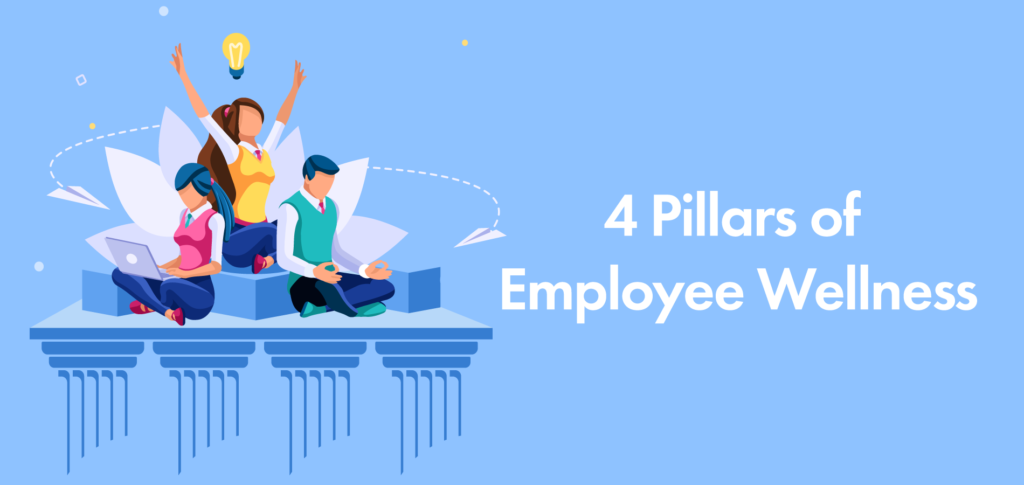
The most effective employee wellbeing solutions for distributed UK workforces are built on four interconnected pillars. Address all four and you build something genuinely transformative. Ignore one and the whole structure wobbles.
Pillar 1: Physical — More Than Just ‘Get Moving’
Home office ergonomics and MSK (musculoskeletal) support are the most overlooked physical health risks in remote work. When someone is sitting at a kitchen table with a laptop perched on a pile of books, they are accumulating the kind of postural damage that leads to long-term absence and physiotherapy costs.
An effective physical wellness program provides home-office DSE (Display Screen Equipment) assessments, wellbeing stipends to fund ergonomic equipment, and access to virtual fitness challenges to keep staff active throughout the week. As outlined in our guide to Workplace Fitness Strategies: Boost Employee Wellbeing in the UK, virtual fitness formats are ideal for hybrid and fully remote teams — no commute, no exclusion, and no excuse not to participate.
Practical ideas include: 10-minute movement breaks built into meeting culture, subsidised access to gym apps, and monthly step challenges run through a group chat. Small, consistent habits create lasting physical resilience.
Pillar 2: Mental — Combating Isolation and Digital Fatigue
The mental health dimension of remote work is where the most serious damage accumulates and where most wellness programmes fall shortest. Virtual social connection and isolation are two sides of the same coin. Your people are digitally connected all day and yet, for many, profoundly lonely.
Mental health first aid (MHFA) training for managers is a non-negotiable starting point. When line managers can recognise the early signs of distress — the shortened messages, the missed calls, the decline in output — they can intervene before a situation becomes a crisis.
Beyond training, psychological safety in digital workplaces requires active cultivation. Anonymous pulse surveys, open-door video hours, and normalising conversations about mental health all help create an environment where asking for support does not feel like a career risk.
To understand how to identify stress hazards in your remote workforce, see this Workplace Stress Risk Assessment Example — an essential reference for HR managers building their remote wellness strategy.
Your Employee Assistance Programme (EAP) should also be front and centre — not buried in the employee handbook. Regular reminders, accessible interfaces, and clear signposting ensure that employees actually use the support available to them.
Pillar 3: Social — Connection That Does Not Feel Forced
There is a fine line between a virtual social event that genuinely connects people and one that feels like another obligation on an already-packed calendar. Getting this right is both an art and a strategy.
The key is variety and autonomy. Not everyone wants to join a virtual pub quiz on a Friday afternoon. Some prefer low-pressure interest groups — a book club in a group chat, a running challenge in a shared spreadsheet, a photography thread in Slack. Virtual wellbeing workshops UK employers have found most effective tend to be opt-in, skills-based, and genuinely useful — not performative.
Virtual coffee breaks, structured buddy systems, and cross-team project days all reduce the sense of silo that remote work creates. The goal is not to recreate the office in digital form. It is to give people genuine reasons to feel connected to their colleagues and their company.
Pillar 4: Nutritional — Fuelling Focus When You Work Near a Fridge
Working from home and healthy eating have a complicated relationship. The fridge is always closed, the kitchen is always available, and the temptation to eat out of boredom or stress is real. Conversely, many remote workers skip meals entirely when deep in ‘flow state’, fuelling the notorious 3pm slump and digital fatigue that derails the second half of the working day.
Practical employer support here includes: subsidised access to nutrition coaching apps, recipe sharing in team channels, and simple guidance on building a ‘focus lunch’ that sustains energy through the afternoon. Work-from-home allowances can be structured to include a nutritional component, covering healthy meal kit services or grocery delivery.
The ROI Case: What Happens When You Actually Invest in Your People
Sceptics of corporate wellness investment often point to cost. The more compelling question is: what is the cost of not investing?
Companies that have built comprehensive, data-driven wellness programmes consistently report measurable returns. Google’s wellbeing investments have been widely cited as contributing to some of the highest employee satisfaction and retention scores in the tech sector. Salesforce reported a 12 to 27% increase in productivity following structured wellness interventions across its workforce — including for remote and hybrid employees.
UK-specific data reinforces this. Deloitte’s 2023 Mental Health and Employers report found that for every £1 invested in employee mental health support, UK employers see an average return of £5.30 in reduced absenteeism, improved presenteeism, and lower staff turnover.
Productivity ROI metrics should be central to every boardroom conversation about wellness spend. This is no longer a cost centre — it is a competitive advantage. For a deeper look at the numbers, explore how to Maximize ROI with Workplace Wellness Programs UK and build the internal business case for your programme.
Remote work burnout management — done proactively — is far cheaper than recruiting and onboarding a replacement employee. The average cost of replacing a UK employee sits at approximately £11,000–£30,000, depending on seniority. A thoughtfully structured wellness program costs a fraction of that, per head, per year.
Digital Health Interventions: The Tools Driving the Best Remote Programs
Technology has made digital health interventions for UK employees more accessible, personalised, and measurable than ever before. The best remote wellness platforms combine multiple functions in one employee-facing interface, reducing friction and improving uptake.
| Top Digital Tools for Remote Wellness• Digital GP access and private medical triage: Services like BUPA Digital GP or AXA Health allow employees to consult a doctor within hours, removing the barrier of NHS wait times for minor but stressful health concerns.• Virtual fitness and mindfulness apps: Platforms like My Spark App, Gympass, Headspace for Work, or Calm for Business give employees on-demand access to movement and stress management on their schedule.• EAP platforms: Modern EAP providers offer real-time chat counselling, CBT modules, financial advice, and legal guidance — all accessible from a smartphone.• Flexible working hours and 4-day workweek pilots: UK companies that have trialled compressed workweeks report significant improvements in focus, morale, and output quality. |
For remote employees who experience stress spikes — particularly during the 3pm slump — immediate support matters. We’ve curated a list of the best free anxiety apps that remote employees can use during high-stress periods
or the ‘3pm slump’ to bridge the gap between formal support and real-time need.
For a broader menu of structured activities, explore Modern Wellbeing Activities for a Happier UK Workplace — a resource that covers digital-first formats such as digital detox hours, virtual movement breaks, and team mindfulness sessions.
Your Step-by-Step Implementation Checklist: From Zero to Wellbeing Program in 90 Days
Launching a remote wellness program does not require a six-figure budget or a year-long project plan. What it does require is intention, structure, and consistency. Here is a practical 90-day roadmap:
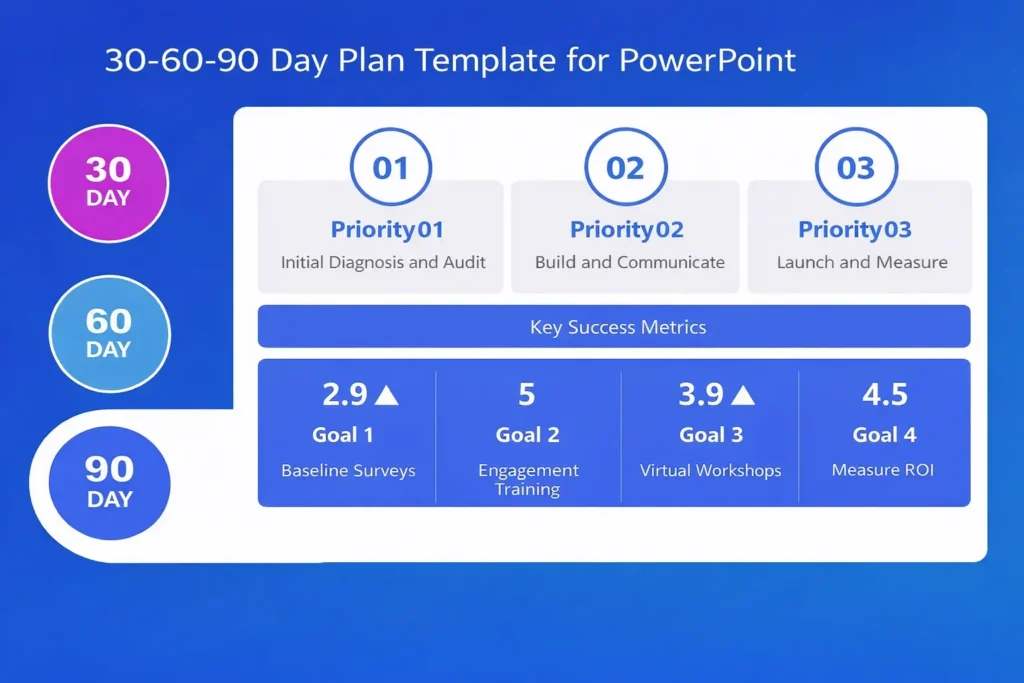
Days 1–30: Diagnose and Design
• Audit the current state: Use our 10-Point Remote Wellness Audit for UK HR Managers to benchmark your baseline.
• Survey your workforce: Anonymous pulse surveys surface what your people actually need — not what you assume they need.
• Review legal obligations: Confirm your Duty of Care compliance for home-based employees, including DSE risk assessments.
• Set measurable KPIs: Establish productivity ROI metrics, absenteeism rates, and engagement scores as your baseline.
Days 31–60: Build and Communicate
• Select your core tools: Choose your EAP provider, digital health platform, and fitness/mindfulness apps.
• Train your managers: Roll out Mental Health First Aid (MHFA) training to all line managers.
• Launch a wellbeing stipend: Introduce work-from-home allowances that employees can allocate to ergonomic equipment, fitness, or nutrition.
• Communicate clearly: Ensure every employee knows what is available, how to access it, and that using it will not affect how they are perceived.
Days 61–90: Activate and Measure
• Launch your first virtual wellbeing workshops: Choose high-demand topics — stress management, sleep, financial wellbeing, or movement.
• Introduce social connection initiatives: Virtual coffee roulette, interest groups, and peer recognition programmes.
• Review and iterate: Measure against your baseline KPIs and adjust based on what the data and your people are telling you.
| Download Our Free 10-Point Remote Wellness Audit for UK HR ManagersStop guessing. Start measuring. Our free audit gives you a clear picture of where your remote wellness program stands — and exactly where to focus first.📧 info@sparkyourhealth.co.uk 0843 289 3468 Request Your Free Audit |
Work-Life Balance for Remote Teams UK: Making It Real, Not Just a Policy
Work-life balance for remote teams UK-wide is one of the most discussed and least implemented concepts in modern HR. Every employee handbook mentions it. Far fewer organisations have a credible plan to deliver it.
Real work-life balance in a remote context means designing the working day so that employees can be fully present during working hours — and fully away from work afterwards. This requires structural enablers: clearly communicated core hours, explicit ‘no meeting’ blocks, and leadership that models the behaviour it expects.
The introduction of flexible working hours is a proven lever. When employees have control over when they work — not just where — their sense of autonomy increases, and with it, their engagement and output. The 4-day workweek movement is gaining significant traction in the UK, with trials showing that companies maintain productivity while reducing hours by 20%.
The most powerful signal you can send? A CEO who visibly logs off at 5pm and does not send emails at 11pm. Culture is modelled from the top. When leaders demonstrate genuine respect for boundaries, the rest of the organisation follows.
Frequently Asked Questions
What are corporate wellness programs for remote UK teams?
They are structured, employer-funded initiatives that support the physical, mental, social, and nutritional health of employees working remotely. Unlike office-based perks, they use digital platforms, virtual workshops, and flexible policies to deliver support wherever an employee is working.
Are UK employers legally required to support remote employee wellbeing?
Yes. Under the Health and Safety at Work Act 1974 and HSE stress management standards, employers have a Duty of Care that extends to home workers. This includes conducting risk assessments, providing access to mental health support, and ensuring the working environment does not damage health.
What is the ROI on corporate wellness investment?
Deloitte’s research shows that UK employers see an average return of £5.30 for every £1 invested in mental health support. Beyond this, wellness programs reduce absenteeism, lower churn, and improve productivity — all of which have direct financial impact.
How do virtual wellbeing workshops work for remote teams?
Virtual wellbeing workshops UK-wide are delivered via video conferencing platforms and cover topics such as stress management, sleep hygiene, financial wellbeing, mindful movement, and nutritional health. The best providers offer recorded versions so employees in different time zones or with caring responsibilities can access sessions on demand.
How much does a remote corporate wellness programm cost?
Costs vary significantly depending on the scope of provision. Entry-level programms using a curated selection of apps and a basic EAP can start from as little as £10–£30 per employee per month. Comprehensive programms with digital GP access, MHFA training, and virtual workshops typically range from £50–£150 per employee per month. The average cost of losing and replacing one employee dwarfs this figure entirely.
How do I start building a remote wellness programme in my organisation?
Start with our free 10-Point Remote Wellness Audit to benchmark your current position. Then book a free 15-minute strategy call with a Spark Your Health specialist who will help you build a tailored roadmap. For further context, explore our full range of corporate wellbeing programs designed specifically for UK organisations.
The Bottom Line: Corporate Wellness Programmes for Remote UK Teams Are Now a Business Essential
The era of the fruit bowl is over. Remote work has fundamentally changed what employee wellbeing means, what it requires, and what it costs when it is ignored.
Corporate wellness programmes for remote UK teams are no longer a premium benefit reserved for large enterprises with generous HR budgets. They are the baseline expectation of a modern, distributed workforce — and the employers who understand this are already seeing the returns in retention, productivity, and culture.
The question is not whether you can afford to invest in employee wellbeing solutions for distributed UK workforces. The question is whether you can afford not to.
Spark Your Health exists to make this simple. We work with UK organisations of all sizes to build remote wellness strategies that are practical, compliant, and genuinely felt by the people they are designed to support. From digital health platforms to bespoke virtual wellbeing workshops, our programmes are built around what actually works.
| Two Ways to Start Today Get the Free Audit: Download our 10-Point Remote Wellness Audit for UK HR Managers and know exactly where to focus first. Book a Strategy Call: Speak with a Spark Your Health specialist in a free 15-minute no-obligation session. 📧 info@sparkyourhealth.co.uk 0843 289 3468 👉 Visit Spark Your Health → |