

Last reviewed: 7 September 2026
Yes, an adult with ADHD may be able to get Personal Independence Payment (PIP). However, an ADHD diagnosis does not automatically qualify someone for PIP. What matters is how a long-term health condition or disability affects the specific daily-living and mobility activities used in the PIP assessment.
You can also claim PIP while working. PIP is not means-tested, so your income or savings do not by themselves prevent you from qualifying.
This guide explains how PIP for ADHD adults works, the points system, which activities may be relevant, current payment rates, evidence, assessments and what you can do if you disagree with a decision.
PIP and ADHD: Quick Answer
| Can you get PIP for ADHD? | Potentially, yes. Eligibility depends on functional impact, not the diagnosis alone. |
|---|---|
| Can adults with ADHD claim PIP? | Yes, if the general PIP eligibility rules and relevant activity descriptors are met. |
| Can you get PIP for ADHD while working? | Yes. PIP is not means-tested. |
| Is an ADHD diagnosis enough? | No. DWP looks at how your condition affects everyday activities and mobility. |
| How many points are needed? | 8 points for the standard rate and 12 points for the enhanced rate of each component. |
| Maximum 2026/27 weekly PIP | £194.60 if enhanced rates of both daily living and mobility are awarded. |
| What if I live in Scotland? | New applicants generally apply for Adult Disability Payment instead of PIP. |
PIP Rules Update: September 2026
The government is currently carrying out the Timms Review of Personal Independence Payment. An interim report was published in July 2026, but it did not introduce final recommendations or replace the current PIP assessment rules.
The review is expected to make recommendations to the Secretary of State in autumn 2026. This article reflects the PIP rules and payment rates currently published by the Department for Work and Pensions (DWP) and will need reviewing again when official changes are announced.
In This Guide
- Can you get PIP for ADHD?
- PIP rules across the UK
- How PIP is assessed
- How the PIP points system works
- Which PIP activities can ADHD affect?
- The PIP reliability test
- How much PIP can you get?
- Can you get PIP while working?
- Evidence for an ADHD PIP claim
- How to describe your daily difficulties clearly
- How to apply
- What happens at an assessment?
- What if your claim is refused?
- PIP and Access to Work
- Frequently asked questions
Can You Get PIP for ADHD in the UK?
Yes. ADHD can form part of a successful PIP claim when its effects meet the relevant PIP assessment criteria.
PIP is intended to help with some of the extra costs associated with a long-term physical or mental health condition or disability. It has two components:
- daily living – for difficulties with specified everyday activities; and
- mobility – for difficulties relating to planning and following journeys or physically moving around.
The important distinction is that PIP is not awarded because a condition has a particular name. Two people with ADHD could receive different PIP decisions because their day-to-day needs are different.
One person may manage most activities independently. Another may regularly need prompting, supervision or assistance with particular activities because of the way their condition affects them.
This functional approach is central to understanding PIP.
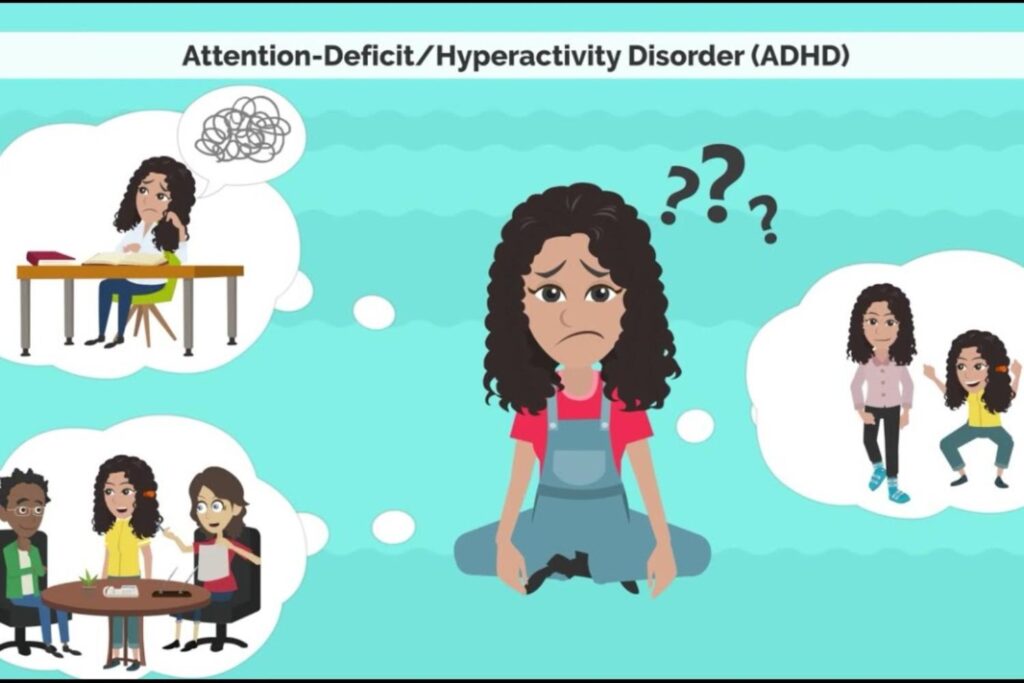
ADHD Diagnosis and PIP Eligibility Are Not the Same Thing
A diagnosis can help explain why you experience certain difficulties, but a diagnosis on its own does not produce PIP points.
Likewise, PIP entitlement and disability protection under employment law are separate questions. Being protected as a disabled person under the Equality Act does not automatically mean you will qualify for PIP, and a PIP decision does not determine all of your rights at work.
For PIP, the central question is:
How does your condition affect your ability to carry out the specific daily-living and mobility activities used in the assessment?
That distinction also matters in the workplace. If you are an employee or employer looking specifically at ADHD support at work, our guide to neurodiversity and workplace support looks at adjustments, management practices and more inclusive working environments.
Do the Same PIP Rules Apply Everywhere in the UK?
Not quite. The benefit system differs depending on where you live.
| Where you live | Disability benefit for a new working-age claim |
|---|---|
| England | Personal Independence Payment (PIP) |
| Wales | Personal Independence Payment (PIP) |
| Scotland | Adult Disability Payment has replaced PIP for new applications |
| Northern Ireland | PIP operates through the separate Northern Ireland benefits system |
The detailed DWP assessment information in this guide is therefore most directly relevant to PIP claims in England and Wales. If you live in Scotland or Northern Ireland, use the official guidance for your nation before applying.
How Long Must Your Difficulties Last to Qualify for PIP?
GOV.UK summarises the rule by saying that you must expect your difficulties to last for at least 12 months from when they started.
More technically, DWP guidance describes:
- a 3-month qualifying period; and
- a 9-month prospective period.
It is the duration of the relevant functional difficulties that matters, rather than simply how long ago ADHD was diagnosed.
How Is PIP Assessed for Adults With ADHD?
PIP looks at 12 defined activities. Ten relate to daily living and two relate to mobility.
The 10 daily-living activities
- Preparing food
- Taking nutrition
- Managing therapy or monitoring a health condition
- Washing and bathing
- Managing toilet needs or incontinence
- Dressing and undressing
- Communicating verbally
- Reading and understanding signs, symbols and words
- Engaging with other people face to face
- Making budgeting decisions
The two mobility activities
- Planning and following journeys
- Moving around
Each activity contains several legal descriptors describing different levels of difficulty and support. Those descriptors carry different point scores.
This is important because difficulties such as being generally disorganised, missing deadlines or struggling to concentrate do not automatically create PIP points. The difficulty must relate to one of the defined PIP activities and meet the requirements of a relevant descriptor.
How Does the PIP Points System Work?
Points from the daily-living activities are added together separately from points from the mobility activities.
| Points | Daily living | Mobility |
|---|---|---|
| 0–7 | No daily-living component | No mobility component |
| 8–11 | Standard rate | Standard rate |
| 12+ | Enhanced rate | Enhanced rate |
There is therefore no separate points system specifically for ADHD. You receive points only for the descriptors that apply to your individual circumstances.
Which PIP Activities Can ADHD Affect?
ADHD can affect people differently, so there is no standard list of activities that every person with ADHD will score for.

The following examples show where ADHD-related difficulties could be relevant in an individual case. They are not predictions of entitlement and should not be treated as a list of points that someone with ADHD automatically receives.
| PIP activity | How ADHD could be relevant in an individual case |
|---|---|
| Preparing food | A person may need prompting or supervision because cognitive difficulties or severe distractibility mean they cannot prepare and cook a simple meal reliably or safely. Simply disliking cooking or occasionally forgetting something would not automatically qualify. |
| Taking nutrition | This may be relevant where a health condition means another person genuinely needs to prompt someone to eat. An irregular diet or choosing to skip meals does not automatically meet a descriptor. |
| Managing medication or therapy | Some people may need another person to prompt or assist them with prescribed medication or treatment. The assessment looks at the actual support needed, not simply whether someone sometimes forgets. |
| Washing, bathing or dressing | These activities may be relevant where the condition means prompting, supervision or assistance is genuinely required. General lateness or poor time management alone does not necessarily meet a PIP descriptor. |
| Engaging with other people | This may be relevant where a person’s condition means they need prompting or qualifying social support to engage face to face. Preferring to avoid social situations is not, by itself, enough. |
| Making budgeting decisions | PIP considers the ability to make budgeting decisions. Where cognitive difficulties mean another person must prompt or assist with those decisions, a descriptor may be relevant. Impulsive spending by itself does not automatically mean points are awarded. |
| Planning and following journeys | Cognitive or mental-health effects may sometimes affect a person’s ability to plan or follow a route reliably. The legal criteria are specific, particularly where psychological distress is involved, so ordinary nervousness or occasional forgetfulness should not be treated as automatically qualifying. |
| Moving around | This activity looks at physical ability to stand and move. ADHD alone would not normally make this activity relevant unless another condition also affects physical mobility. |
The safest approach is therefore not to ask: “How many points does ADHD get?”
Ask instead: “Which PIP activity is affected, what help do I genuinely need, how often do I need it, and what happens if I do not have that support?”
The PIP Reliability Test: What Does “Able to Do an Activity” Mean?
One of the most important parts of the PIP assessment is that an activity is not considered only on whether you can technically do it once.
DWP guidance considers whether you can complete an activity:
- safely – without an unacceptable risk of harm to yourself or another person;
- to an acceptable standard;
- repeatedly – as often as reasonably required; and
- within a reasonable time – generally no more than twice as long as a person without the relevant impairment would normally take.
Why this matters for ADHD
Imagine someone can physically prepare a meal but regularly needs another person present because they become distracted and leave cooking unattended.
The relevant question is not simply: “Can they cook?”
It is whether they can complete the specific PIP activity reliably and whether the relevant descriptor applies.
What About Good Days, Bad Days and Fluctuating ADHD Symptoms?
PIP does not assess only your very best day or your very worst day.
DWP guidance considers the effect of a condition over a longer period. In general, a scoring descriptor can apply where the relevant difficulty affects the activity on more than 50% of days during the relevant 12-month period.
That is why frequency matters when completing a claim.
Instead of saying:
“Sometimes I struggle to cook.”
it is more useful to explain, truthfully, how often the problem occurs, what support is needed and what happens without that support.
How Much PIP Can You Get for ADHD?
There is no special PIP payment rate for ADHD. The amount depends on whether you qualify for the daily-living component, the mobility component, or both, and whether each is awarded at the standard or enhanced rate.
For the 2026/27 financial year, the published weekly rates are:
| Component | Standard rate | Enhanced rate |
|---|---|---|
| Daily living | £76.70 per week | £114.60 per week |
| Mobility | £30.30 per week | £80.00 per week |
Someone awarded the enhanced rates of both components would therefore receive £194.60 per week at 2026/27 rates.
PIP is tax-free and is normally paid every four weeks. Rates can change each financial year, so always check the latest official figures before making financial decisions.
Can You Get PIP for ADHD While Working?
Yes. You can work and receive PIP.
PIP is not means-tested, which means your wages and savings do not by themselves prevent you from receiving it.
Having a job also does not automatically prove that you can carry out all of the PIP activities without difficulty.
However, information about how you function at work may still be relevant if it appears to contradict or support what you have said about your daily needs.
For example, someone may perform well at work because they have:
- highly structured routines;
- support from colleagues or a manager;
- specialist software;
- adjusted hours;
- written instructions;
- a quiet workspace; or
- other reasonable adjustments.
The important thing is to describe your circumstances accurately rather than assuming employment either proves or disproves PIP eligibility.
What Evidence Can Support a PIP Claim for ADHD?
Evidence can help establish both your condition and, more importantly, how it affects your functioning.
Depending on your circumstances, relevant evidence might include:
- an ADHD diagnostic or assessment report;
- relevant GP records or letters;
- psychiatrist or specialist reports;
- your current prescribed medication information;
- relevant treatment or support plans;
- clinical correspondence describing functional difficulties;
- information about support you genuinely rely on in daily life; and
- other documents that directly relate to the PIP activities affected.
Diagnosis evidence and functional evidence are different
A report confirming ADHD may establish the diagnosis, but it does not necessarily explain whether you need prompting to prepare food, assistance with budgeting decisions or support following a journey.
Evidence is most useful when it helps connect your condition to your actual daily needs.
Does an occupational health report help with PIP?
An occupational health report is primarily written to address health in relation to work. It is not a PIP assessment and should not be treated as one.
It may contain useful supporting information where it documents genuine functional difficulties or workplace support, but its relevance depends on what the report actually says.
If you want to understand the separate role of workplace health assessments, see our guide to occupational health assessments in the UK .
How to Explain How ADHD Affects Your Daily Life Clearly
A PIP form is not the place to exaggerate, minimise or try to guess what an assessor wants to hear. The goal is to describe your real experience as clearly as possible.
For each relevant activity, it can help to think about five questions:
- What activity am I having difficulty with?
- What actually happens when I try to do it?
- Do I need prompting, supervision, assistance or an aid?
- How often does this happen?
- What happens if I do not receive that support?
Example: preparing food
A vague description might be:
“My ADHD makes cooking difficult.”
A more useful factual explanation, if it genuinely reflects the person’s experience, would identify the practical difficulty:
“When I cook I regularly become distracted and leave the kitchen while food is on the hob. My partner often needs to remind me to return and check the food. Without that support I have left pans unattended.”
That does not guarantee any particular descriptor or points. It simply gives the decision-maker useful information about the activity, the support involved and the risk.
Example: budgeting
Simply saying:
“I am impulsive with money.”
does not explain whether a PIP budgeting descriptor applies.
If another person genuinely has to help you understand or make budgeting decisions, explain what decisions they help with, what happens without their help and how often that support is needed.
Only describe difficulties and examples that are true for your circumstances.
What If You Have ADHD Alongside Another Condition?
Some people with ADHD also live with another physical, neurodevelopmental or mental health condition.
If this applies to you, PIP does not award a separate set of points for every diagnosis. Instead, the assessment considers how all of your relevant conditions affect your ability to carry out the 12 activities.
For example, ADHD may affect one aspect of daily functioning while an anxiety disorder, physical condition or another impairment affects another.
The important thing is to explain the combined real-world functional effect without assuming that having more diagnoses automatically produces more points.
If anxiety significantly affects your interactions with others, our guide to social anxiety symptoms and daily life provides separate information about that condition.
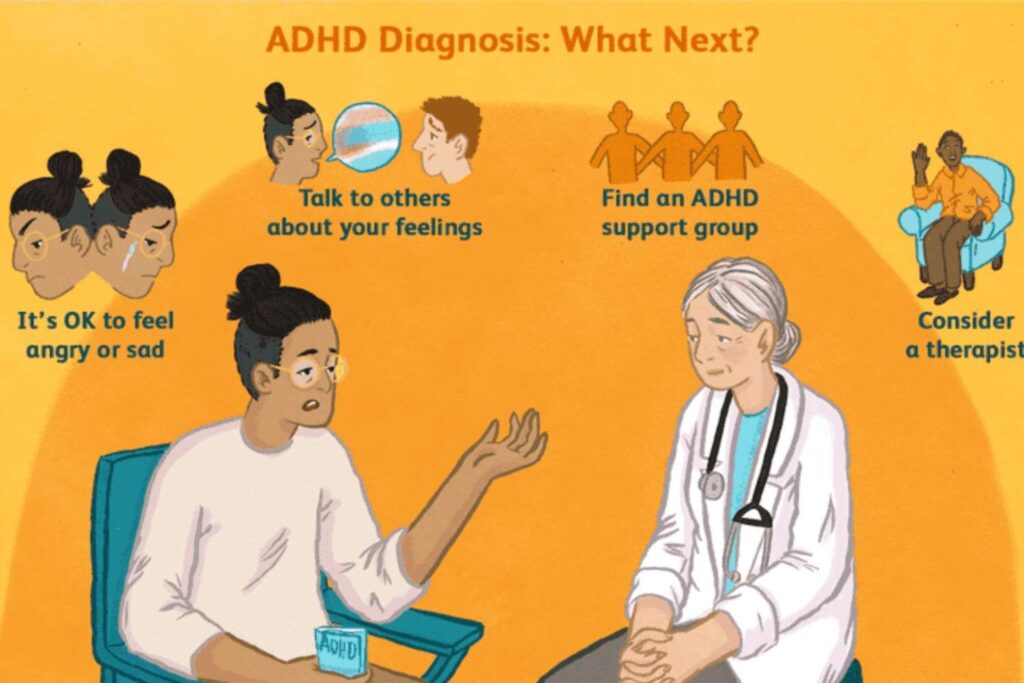
How Do You Apply for PIP With ADHD?
For a new PIP claim in England or Wales, the process generally involves:
- Start your claim. You provide basic personal information and details about your health condition.
- Complete the form about how your condition affects you. This is where you explain difficulties with the relevant daily-living and mobility activities.
- Provide relevant supporting information. Include evidence that helps explain your condition and functional needs.
- You may be invited to an assessment if more information is needed. Not everyone should assume an assessment will automatically be required.
- DWP makes a decision. The decision letter explains whether PIP has been awarded and, if so, at what rates.
Making the process easier when paperwork itself is difficult
Long forms can be particularly difficult for someone who struggles with sustained attention, organisation or task initiation.
Practical steps may include:
- breaking the form into smaller sections;
- collecting documents before you begin;
- making notes of real examples before filling in each activity;
- asking an appropriate person to help you organise information; and
- keeping copies of forms and evidence you submit.
These are organisational strategies, not ways of changing the facts of a claim.
What Happens at a PIP Assessment?
You may be invited to an assessment with a health professional if more information is needed.
An assessment can take place:
- at an assessment centre;
- at home in some circumstances;
- by telephone; or
- by video call.
The discussion focuses on how your condition affects the daily-living and mobility activities and may also cover relevant treatment.
You can have another person with you, such as a friend or support worker.
How should you prepare?
Review the information you have already provided and be ready to explain your normal needs accurately.
Avoid trying to memorise a script. If your experience varies, explain that clearly and give an idea of frequency rather than describing only your best or worst day.
What If Your PIP Claim Is Refused or You Think the Award Is Wrong?
A refusal does not automatically mean the decision is correct, but it also does not mean everyone should receive PIP.
If you believe DWP has made an error, misunderstood your needs or overlooked relevant evidence, you can usually ask for the decision to be looked at again through mandatory reconsideration.
You normally need to request mandatory reconsideration within one month of the date of the decision, although a late request may sometimes be accepted where there is a good reason.
If you still disagree after mandatory reconsideration, you can usually appeal to an independent tribunal. Your decision and mandatory reconsideration notices explain the next steps.
Before challenging a decision
Read the reasons carefully and compare them with:
- the activities you described;
- the descriptors you believe apply;
- the evidence already provided; and
- any important facts you believe were misunderstood or missed.
If you need individual benefits advice, consider seeking help from an appropriate independent welfare-rights or benefits adviser.
Can You Get PIP and Access to Work for ADHD?
Potentially, yes. PIP and Access to Work have different purposes.
PIP is a disability benefit based on difficulties with specified daily-living and mobility activities.
Access to Work is designed to provide practical employment support where a disability or health condition affects your ability to do your job or travel to work.
Current Access to Work guidance specifically includes ADHD among the conditions that may create a need for workplace support.
Depending on circumstances, workplace support might involve practical equipment, specialist support or other assistance connected with employment.
For more information, read our guide to Access to Work and workplace support .
ADHD Support at Work Is Separate From PIP
A benefits claim should not become the only conversation about support.
If ADHD is affecting your work, you may also want to discuss workplace adjustments with your employer. Depending on the situation, HR, a manager or occupational health may help explore ways of reducing avoidable barriers.
Examples can include clearer written instructions, structured priorities, reduced distractions, assistive tools or different communication arrangements where appropriate.
Our UK employee mental health resources guide explains the different types of workplace support that may be available.
Employers looking at neurodiversity more broadly can also read our guide to creating more neuro-inclusive workplaces .
Common PIP and ADHD Mistakes to Avoid
1. Assuming the diagnosis automatically qualifies
PIP is based on the relevant functional descriptors, not simply the condition name.
2. Listing ADHD symptoms without connecting them to PIP activities
“Poor concentration”, “executive dysfunction” or “impulsivity” are not separate PIP activities. Explain how any difficulty affects a specific assessed activity.
3. Describing only an unusually bad day
Frequency and the longer-term pattern matter. Explain what happens across your normal range of days.
4. Describing only your best day
People sometimes minimise difficulties because they are accustomed to coping or relying on support. Describe the support you actually need and use.
5. Assuming working means you cannot claim
PIP can be paid to people who work.
6. Assuming every ADHD difficulty scores points
Not every symptom fits a PIP descriptor. Accuracy is more important than trying to connect every difficulty to the benefit.
7. Exaggerating or using somebody else’s examples
A strong claim is a clear and consistent account of your own circumstances, supported by evidence where available.
What Does a Strong ADHD PIP Explanation Actually Do?
It does not try to prove that ADHD is inherently severe.
Instead, it explains:
- which assessed activities are affected;
- what the difficulty looks like in everyday life;
- what support is required;
- why that support is required;
- how often the difficulty occurs;
- whether the activity can be done reliably; and
- what happens when the support is not available.
That is much more useful than filling a form with medical terminology while leaving the practical impact unexplained.
Frequently Asked Questions About PIP for ADHD Adults
Can you get PIP for ADHD?
Yes. An adult with ADHD may qualify for PIP if the effects of their long-term condition meet the relevant daily-living or mobility descriptors. A diagnosis alone does not automatically qualify someone.
Can I get PIP for ADHD as an adult?
Potentially. PIP is available to eligible working-age adults whose long-term condition causes qualifying difficulties with specified everyday or mobility activities.
Can you claim PIP for ADHD while working?
Yes. PIP is not means-tested, so you can receive it while working. Earnings and savings do not by themselves prevent eligibility.
How much PIP can you get for ADHD?
There is no ADHD-specific PIP rate. For 2026/27, daily living pays £76.70 a week at the standard rate or £114.60 at the enhanced rate. Mobility pays £30.30 or £80.00 respectively. Your award depends on the points you score for the relevant activities.
How many PIP points do you need?
You need at least 8 points within a component for the standard rate and at least 12 points for the enhanced rate. Daily-living and mobility scores are calculated separately.
Does ADHD automatically get PIP?
No. PIP is not automatically awarded for ADHD or any other diagnosis. DWP assesses the way your condition affects specific daily-living and mobility activities.
What evidence is useful for a PIP claim for ADHD?
Relevant evidence may include an ADHD assessment report, GP or specialist information, prescribed medication records and other documents that help explain your functional difficulties. Evidence is most useful when it relates to the activities affected.
Can ADHD qualify for the mobility part of PIP?
It can in some circumstances where the relevant mobility descriptor is met. The planning and following journeys activity can take account of qualifying cognitive or mental-health-related difficulties. The moving-around activity concerns physical mobility.
Can I claim PIP if I have ADHD and anxiety?
PIP considers the overall functional effects of all relevant health conditions rather than awarding separate points for each diagnosis. Explain how your conditions affect the specific assessed activities.
Can I claim PIP for ADHD without being unemployed?
Yes. You do not have to be unemployed to receive PIP. It can be paid to people who are working.
Is PIP means-tested?
No. PIP is not means-tested. Your earnings and savings do not determine the amount of PIP you receive.
Do people in Scotland claim PIP for ADHD?
New working-age disability benefit applications in Scotland are generally made for Adult Disability Payment, which has replaced PIP there.
What happens if my PIP application is refused?
If you disagree with the decision, you can usually request mandatory reconsideration. This normally needs to be requested within one month of the decision date. If you still disagree afterwards, you may usually appeal to an independent tribunal.
Final Answer: Can Adults With ADHD Get PIP?
Yes, but ADHD does not automatically qualify an adult for PIP.
Eligibility depends on how your long-term condition affects the specific daily-living and mobility activities used in the PIP assessment and whether the relevant descriptors apply.
The most useful approach is therefore to focus less on proving that ADHD is a serious condition in general and more on explaining your own functional needs accurately.
Look at each relevant PIP activity. Consider what happens when you perform it, what support you need, how often the problem occurs and whether you can do it safely, repeatedly, to an acceptable standard and within a reasonable time.
If you are also working, remember that workplace support and PIP are separate. You may be able to receive PIP while working and access employment-focused help such as Access to Work or reasonable workplace adjustments where appropriate.
Important Information
This article provides general information about Personal Independence Payment and ADHD and is not individual benefits, legal or medical advice. PIP decisions depend on individual circumstances and the legislation and guidance in force at the time of the claim.
Benefit rules and payment rates can change. Check current government guidance or speak to an appropriate benefits adviser if you need advice about your own circumstances.
Official Sources Used for This Guide
- GOV.UK – Personal Independence Payment eligibility guidance
- GOV.UK – Personal Independence Payment payment rates
- Department for Work and Pensions – PIP Assessment Guide, Parts 1 and 2
- GOV.UK – How to claim Personal Independence Payment
- GOV.UK – Mandatory Reconsideration and benefit appeals guidance
- GOV.UK – Access to Work eligibility guidance
- Social Security Scotland – Adult Disability Payment guidance
- Department for Work and Pensions – Timms Review of Personal Independence Payment
Last factual review: 7 September 2026.