
By the Spark Your Health Editorial Team | Mental & Digital Wellness | UK
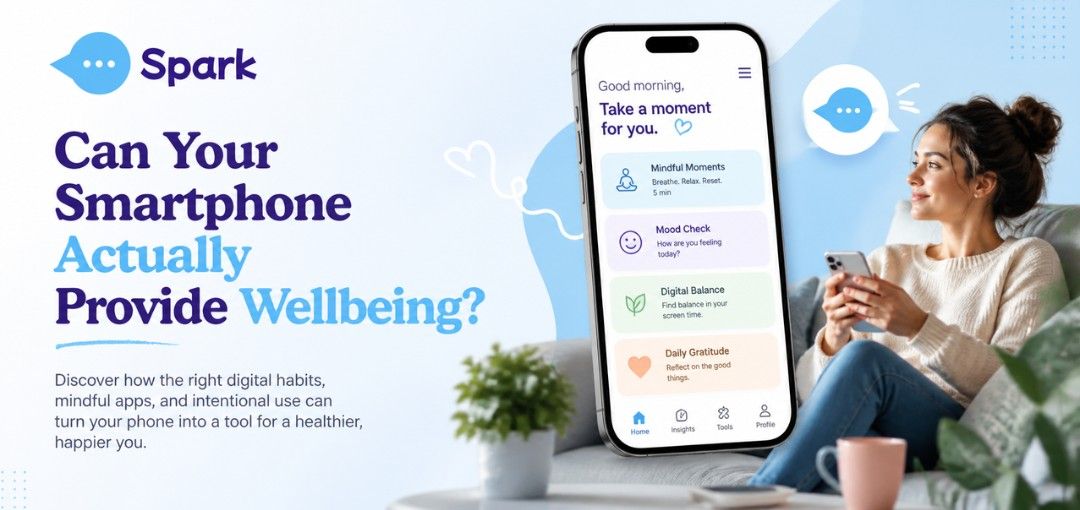
| Quick Answer: Yes — but only intentionally. Research published in the Journal of Medical Internet Research confirms that smartphones, when used with purpose, can genuinely provide wellbeing through mindfulness tools, biofeedback, and structured digital boundaries. The key is shifting from passive scrolling to intentional, human-centric use. |
| Burnt Out? Find Out in 2 Minutes. Take our free Spark Your Health Wellbeing Audit → info@sparkyourhealth.co.uk | 0843 289 3468 |
Introduction: The Vibration That Was Never There
You feel your phone buzz. You reach for it. Nothing. No notification. No message. No missed call. This phenomenon is known as phantom vibration syndrome that affects an estimated 89% of adults according to research from Indiana University. It is not a quirk. It is your nervous system so conditioned to digital alerts that it generates false ones. That is the world we live in.
We exist in a state of chronic notification fatigue, an unrelenting sensory overload where the average UK adult checks their phone 58 times per day. The result is not connection. It is cognitive debt, frayed attention, and a quiet, persistent tech anxiety that we have simply normalised.
But here is the provocative truth that this article will explore: your smartphone is not the villain. The problem is not the device, it is how we use it. When approached with intention, your phone can actively provide wellbeing rather than erode it. This is not wishful thinking. There is a growing body of evidence, a set of practical tools, and a methodology that makes it real.
The Science of the Scroll: Why We Feel Drained
Before we talk about solutions, we need to understand the problem at its root. The clinical term is Problematic Smartphone Use (PSU) and it is not about weak willpower. PSU is a neurological pattern where dopamine reward loops, designed by engineers to maximise engagement, override our natural capacity to self-regulate.
Every notification triggers a micro-dose of cortisol that is the stress hormone. Over hundreds of interruptions per day, this creates a sustained state of low-level physiological arousal. Your body believes it is permanently on alert. The long-term consequence is not just irritability. It is measurable damage to cognitive load and your brain’s finite capacity to process, reason, and create. Constant digital interruption fragments this capacity, making it harder to focus on deep, meaningful tasks.
Add to this the phenomenon of nomophobia; the documented fear of being without your mobile phone and you begin to see how deeply these devices have embedded themselves into our psychological architecture. A 2023 UK survey by Deloitte found that 44% of adults described their relationship with their phone as something they actively worried about.
The Fear of Missing Out (FOMO) compounds this further, especially on social media platforms engineered to keep your attention through curated comparison. When digital stress starts affecting team productivity, a dedicated employee wellbeing platform can help bridge the gap between high performance and mental health.
Crucially, constant digital connectivity does not just drain your mind, it drains your body too. Recognising the physical signs of stress like tense shoulders, disrupted sleep, persistent headaches, is the first step in realising you need a digital reset. And understanding this connection between screen time and physical symptoms is precisely why a structured approach matters. This is especially critical for younger users; if you are a parent or educator, our in-depth guide on how screen time affects teens’ mental health explores the longer-term consequences and practical steps families can take.
The Paradox of Digital Wellness: When Technology Heals
Here is where the conversation shifts. The same device causing harm can, under the right conditions, actively provide wellbeing. The difference lies in one word: intention.
Researchers measuring Subjective Wellbeing (SWB) , the scientific index of how satisfied and happy a person feels, found that structured, active use of smartphones correlates with higher wellbeing scores, while passive use (doomscrolling, unconscious browsing) correlates with lower ones. Active means engaging: calling a loved one, completing a breathing exercise, journalling. Passive means consuming without choosing.
This distinction forms the backbone of what researchers now call human-centric technology design philosophy centred on serving the human user rather than extracting attention from them. Apps built on this principle do not reward you for staying longer. They reward you for getting better. While screens often clutter our minds, practising structured wellbeing exercises that transform your mind can help reset your focus after a long day of scrolling.
The concept of digital resentment, that creeping feeling of being chained to your device, answering emails at midnight, scrolling without purpose is real. But it is not inevitable. The antidote is not abstinence; it is architecture. It is designing your digital environment to serve your values, not hijack them.
The Screen-Life Balance Matrix: Passive vs. Intentional Tech Use
The following comparison illustrates how identical devices produce radically different outcomes depending on how they are used. This is the foundation of achieving genuine screen-life balance.
| Feature | ⛔ Passive Habit (Drains You) | ✅ Intentional Habit (Provides Wellbeing) |
| Social Media | Comparison scrolling & FOMO triggers | Curated inspiration, learning groups & community support |
| Notifications | Instant reactive pings — high cortisol | Scheduled summaries — proactive, calm, in control |
| Night-Time Use | Blue light scrolling disrupts melatonin | Blue light hygiene: Night mode, audiobooks, guided sleep |
| Morning Routine | Phone-first — anxiety before breakfast | Mindful scrolling: intentional news check after grounding |
| Work Hours | Constant email monitoring — always-on stress | Set Focus Mode windows — deep work, then check-in |
| Mental Health | Doomscrolling amplifies worry | Biofeedback apps & meditation timers build resilience |
| Reclaim your focus, one day at a time. Email us at info@sparkyourhealth.co.uk or call 0843 289 3468 to receive it instantly. |
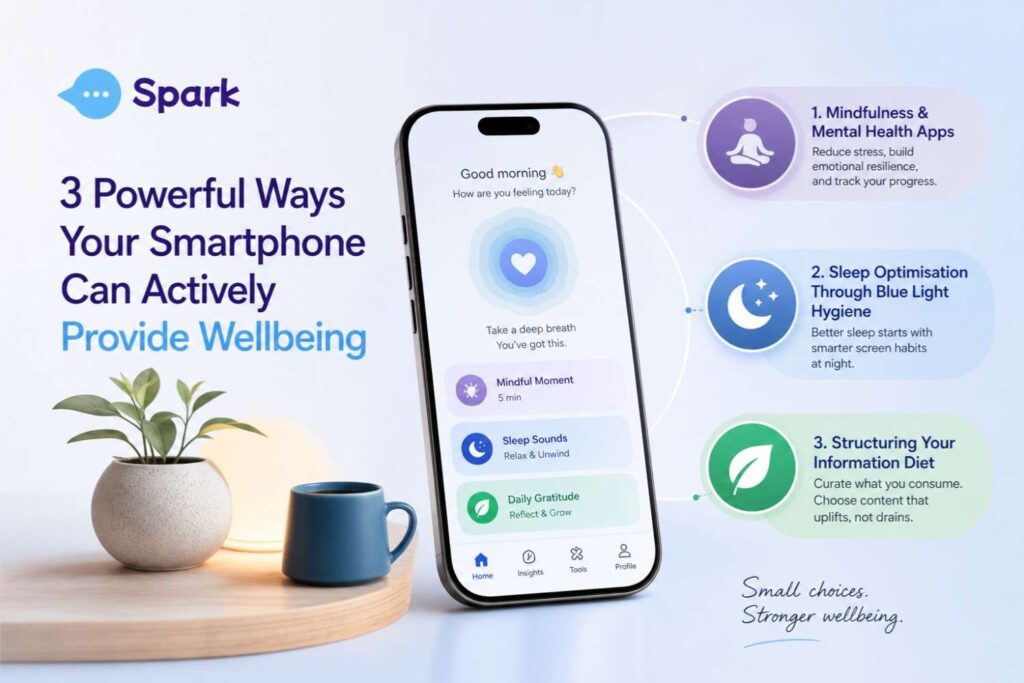
3 Powerful Ways Your Smartphone Can Actively Provide Wellbeing
1. Mindfulness & Mental Health Apps
The My Spark App and similar biofeedback apps represent a new frontier in preventive mental health. These tools track physiological markers, heart rate variability, breathing rhythm, sleep patterns and translate them into actionable insights. Rather than guessing how stressed you are, you know. And knowing empowers action. If you are looking to turn your device into a tool for peace, there are several free anxiety apps that can help you manage stress on the go.
Guided meditation apps have shown in peer-reviewed trials (University of Oxford, 2022) to reduce perceived stress scores by up to 31% after just eight weeks of consistent use. The key word is consistent. The phone is a tool; the human decides how to wield it.
2. Sleep Optimisation Through Blue Light Hygiene
One of the most damaging and most overlooked consequences of evening screen use is its impact on melatonin production. The blue light wavelengths emitted by smartphones suppress this sleep hormone by up to 50%, according to Harvard Medical School research. The result is delayed sleep onset, fragmented rest, and daytime fatigue that compounds cognitive load the following day.
Practising blue light hygiene is straightforward: enable Night Shift or Night Mode from sunset onwards, use the Do Not Disturb function after 9pm, and replace late-night scrolling with audio content, podcasts, audiobooks, or sleep-specific soundscapes. These are small changes that deliver measurable biological benefits.
3. Structuring Your Information Diet
Just as nutritional science talks about what we eat, digital wellness demands we address what we consume online. An intentional information diet means actively curating your digital inputs: unfollowing accounts that trigger comparison, limiting news consumption to one scheduled window, and choosing content that educates or uplifts rather than agitates.
The shift from passive browsing to mindful scrolling or intentional consumption is perhaps the single highest-leverage change available to any smartphone user. It costs nothing and requires no new app. It requires only awareness.
Engineering Your Device to Provide Wellbeing: Technical Hacks
Abstract advice is rarely enough. Here are the concrete, proven techniques that convert a dopamine machine into a tool of digital zen.
Grey-Scaling Your Screen
The colours on your smartphone screen are not accidental. They are engineered to trigger emotional responses. The red notification badge. The vibrant Instagram feed. Switching your display to greyscale, a technique called grey-scaling or minimalist interface design that removes the dopamine-triggering visual stimulation. Users consistently report checking their phones significantly less often after enabling this setting. Find it under Accessibility > Display & Text Size (iOS) or Digital Wellbeing (Android).
Creating Device-Free Zones
Designating physical areas in your home as tech-free sanctuaries creates psychological boundaries that protect recovery time. The bedroom is the most important. Research from the Sleep Foundation UK found that adults who kept their phone outside the bedroom reported 23% better sleep quality scores. The kitchen table, family meals, and the first 30 minutes after waking are equally powerful zones to protect. Individual habits are great, but for long-term organisational health, implementing structured corporate wellbeing solutions ensures that ‘switching off’ becomes part of the company culture, not just a personal struggle.
Practising the Digital Sabbath
Perhaps the most transformative practice in the digital wellness toolkit is the Digital Sabbath, a full 24-hour period each week with no screens beyond essential use. Ancient in concept, urgent in application. Those who practise a weekly digital Sabbath report reduced digital resentment, stronger in-person relationships, and a restored sense of autonomy over their time. Starting with just a Sunday afternoon is enough to experience the shift.
Designing Biophilic Tech Environments
The concept of biophilic tech or biophilic design applied to digital spaces means configuring your device to feel calm and natural rather than urgent and loud. This includes using nature-based wallpapers, ambient soundscapes, and notification groupings that deliver information in gentle batches rather than an unrelenting stream. The goal is an interface that feels like a quiet room, not a trading floor.
The Workplace Dimension: Digital Stress at an Organisational Level
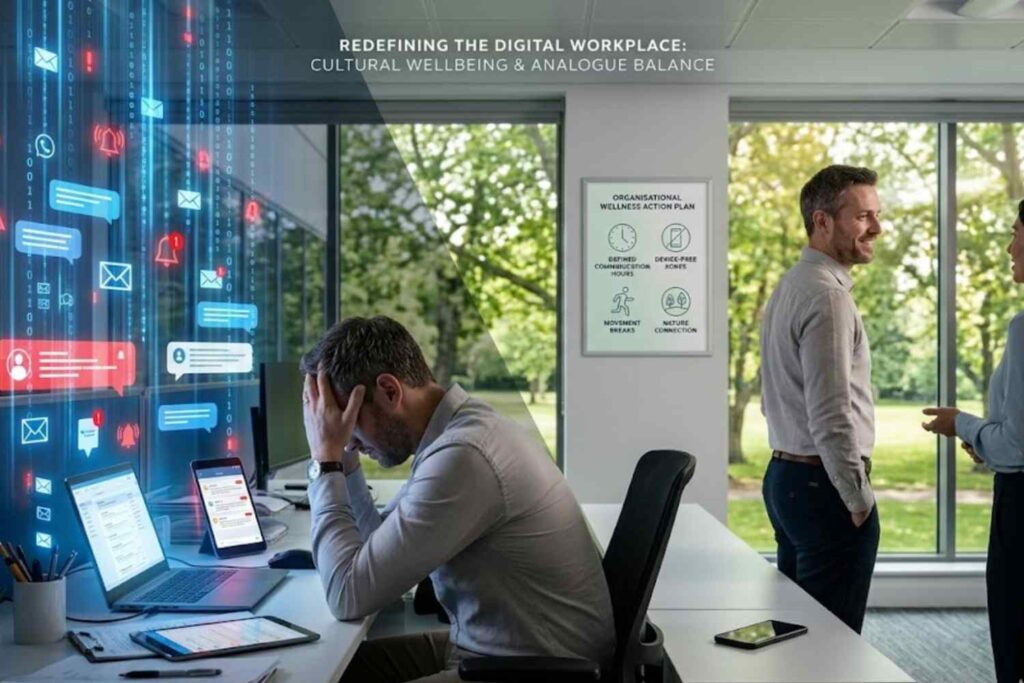
The ‘always-on’ culture is not a personal failing, it is a systemic one. In UK workplaces, the expectation of instant digital availability has created what researchers at King’s College London describe as chronic occupational stress, where the boundary between work and recovery has effectively dissolved.
For HR leaders, managers, and business owners, this is not merely a wellbeing issue. It is a productivity, retention, and legal risk issue. Under the UK’s duty of care provisions, employers have a responsibility to protect workers from foreseeable mental health harm and cumulative digital overload qualifies.
Creating a Wellness Action Plan for your organisation, one that includes defined communication hours, device-free meeting protocols, and structured digital boundaries is now a strategic imperative, not an optional perk. A structured employee wellness programme provides the framework to turn good intentions into measurable, sustainable cultural change.
Beyond the Screen: Why Your Phone Is Only 10% of the Puzzle
Technology should support human flourishing, not replace it. The most powerful wellbeing interventions remain stubbornly analogue: movement, nature, sleep, genuine connection, and purposeful work. Your smartphone can remind you to drink water, guide a breathing exercise, or play calming music on your walk. But it cannot walk for you.
The concept of screen-life balance mirrors work-life balance in its ambition: not elimination, but proportion. Studies consistently show that adults who combine structured digital boundaries with regular physical activity, social connection, and time in natural environments report the highest Subjective Wellbeing (SWB) scores higher than those who exclusively pursue either digital abstinence or unrestricted tech use.
Your phone can provide wellbeing when it becomes part of a deliberately designed lifestyle, one where screens serve you, not the other way around. That is the Spark Your Health methodology in a single sentence.
Frequently Asked Questions
Can a smartphone actually reduce stress?
Yes, when used intentionally. Biofeedback apps, guided meditation tools, and structured notification management have all demonstrated measurable stress reduction in peer-reviewed studies. The critical variable is active versus passive use.
What are the signs you need a digital detox immediately?
Key warning signs include: checking your phone within five minutes of waking, anxiety when separated from your device (nomophobia), difficulty focusing on conversations without reaching for your phone, disrupted sleep, and a general feeling of being overwhelmed by digital noise — what we call sensory overload.
How do I set healthy digital boundaries for work?
Start by designating email-free hours — ideally before 8am and after 6pm. Communicate response-time expectations to colleagues. Use Focus Mode during deep work windows. If you manage a team, model the behaviour you want to see. For structured organisational support, a formal wellness action plan provides the governance to make boundaries sustainable.
What are the best free apps that provide wellbeing and mental clarity?
In the UK market, highly effective free tools include Insight Timer (guided meditation), Headspace (trial), Wim Hof Method (breathwork), and NHS-linked apps such as Every Mind Matters. The My Spark App offers tailored wellbeing support specifically designed around lifestyle factors. For a curated shortlist, explore our recommended free anxiety apps guide.
How long does a digital detox take to show results?
Most people notice improved sleep quality within the first three to five days of consistent blue light hygiene. Reductions in anxiety and improved focus typically emerge within two weeks of structured notification management. Sustained improvements in mood and productivity are generally measurable after 30 days of intentional digital habits.
Conclusion: Reclaim the Tool, Reclaim Your Life
Your smartphone is not the enemy of your mental health. Unchecked habit is. The same device that fuels anxiety when used passively can genuinely provide wellbeing when approached with clarity, structure, and intent. From practising a Digital Sabbath to curating your information diet, the power to shift your relationship with technology lies with you; not with the manufacturers, not with the algorithms.
The UK’s mental health landscape is at an inflection point. Digital stress, burnout, and tech anxiety are no longer fringe concerns; they are mainstream challenges affecting individuals, families, and organisations at scale. The response cannot be simply ‘put your phone away.’ It must be smarter, more human-centric, and more sustainable than that.
At Spark Your Health, we exist to bridge the gap between digital life and genuine human flourishing. Whether you are an individual looking to reset, or an organisation seeking to protect your most important asset, your people we have the tools, programmes, and expertise to help.
Ready to spark your health? The next step is one click or one call away.
| Find Out Where You StandJoin thousands of UK professionals reclaiming focus, energy, and clarity. 📧 info@sparkyourhealth.co.uk 📞 0843 289 3468 |
| About Spark Your Health Spark Your Health is a UK-based digital wellbeing and employee wellness platform dedicated to helping individuals and organisations thrive in the modern, always-on world. Our programmes are grounded in evidence-based psychology, behavioural science, and lived experience — not generic advice. Visit sparkyourhealth.co.uk to learn more. |