By the Spark Your Health Corporate Health Team | sparkyourhealth.co.uk
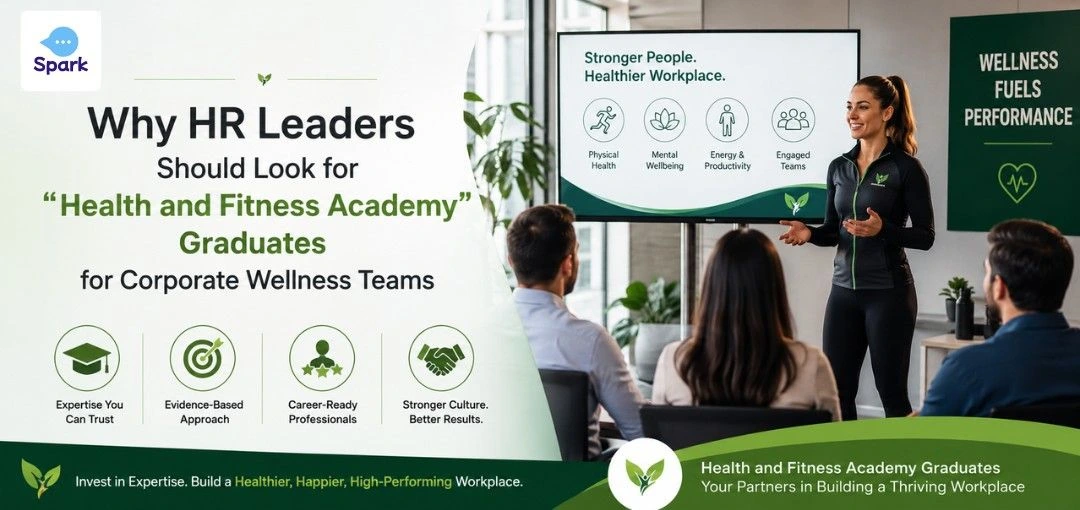
Most corporate wellness programs fail quietly. Not because the intention was wrong, but because the person delivering them was never trained for a corporate environment in the first place.
Across the UK, HR departments are under growing pressure to reduce healthcare costs, improve employee engagement metrics, and demonstrate a genuine duty of care to their workforce. Yet many are still hiring fitness professionals based on Instagram followings, vague personal training certificates, or informal referrals — with no standardised vetting process in place.
The solution is straightforward. Hiring graduates from a credible health and fitness academy gives HR leaders something far more valuable than a motivated individual. It gives them a professionally trained, compliance-ready specialist who understands the specific demands of a corporate health environment from day one.
📞 Speak to our corporate health specialists today:
0843 289 3468 | ✉️ info@sparkyourhealth.co.uk
The Real Risk of Unverified Fitness Talent in the Workplace
There is a legal dimension to this conversation that HR teams cannot afford to ignore.
When a fitness professional works with your employees — on your premises, during working hours — your organisation assumes a significant portion of liability for their actions. If that individual lacks proper credentials, carries no professional indemnity insurance, or has never completed a corporate health risk assessment, you are exposed. Occupational health and safety law in the UK is explicit: employers hold a duty of care that extends to the health interventions they commission on behalf of staff.
This is not a theoretical concern. Employment tribunals and HSE investigations have increasingly scrutinised wellness programme delivery as part of broader human resources compliance reviews. The question is no longer whether your gym instructor is enthusiastic. It is whether they are qualified to operate safely within a regulated workplace.
A graduate from a recognised health and fitness academy enters your organisation already trained in injury prevention, risk management, and professional conduct standards. That training is the difference between a programme that protects your business and one that quietly creates liability.
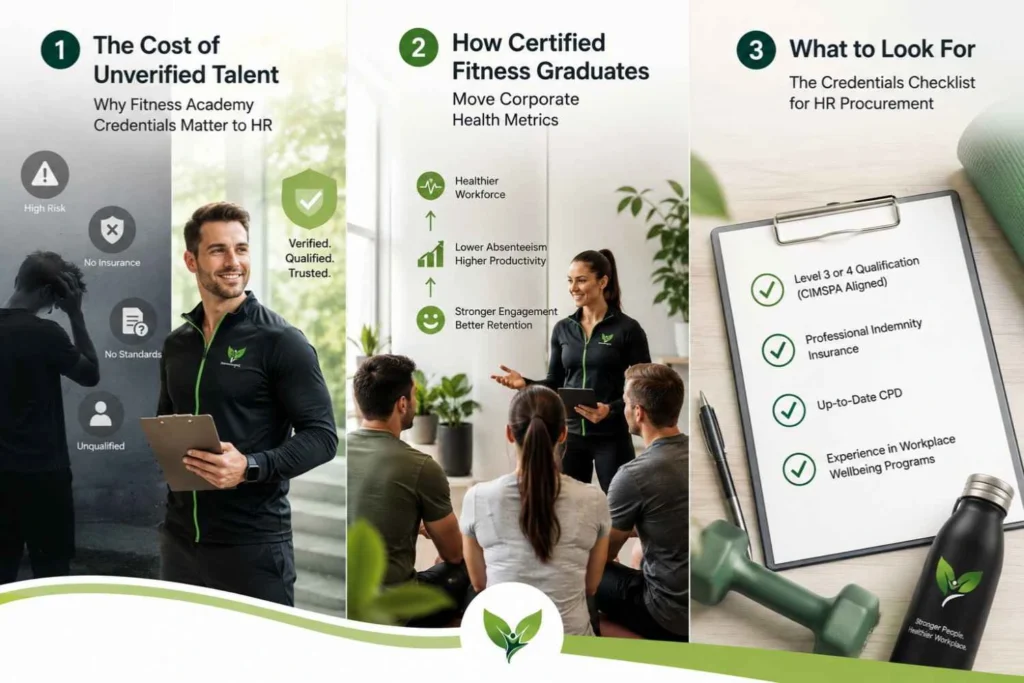
1. The Cost of Unverified Talent: Why Fitness Academy Credentials Matter to HR
The credentials question sits at the intersection of talent acquisition and legal risk — two areas that HR directors manage simultaneously under significant pressure.
CIMSPA accredited professionals — the Chartered Institute for the Management of Sport and Physical Activity’s recognised standard — have completed structured training that covers not just physical coaching but also client screening, health history evaluation, and professional boundaries. A verified Level 3 or Level 4 personal trainer from a reputable academy for health and fitness holds qualifications that are mapped to national occupational standards.
Compare that to an unaccredited hire, and the gap becomes clear:
- No guaranteed understanding of contraindicated exercises for employees with pre-existing conditions
- No requirement to carry professional indemnity insurance
- No training in behaviour change science — the actual driver of long-term employee engagement
- No framework for adapting programmes to a sedentary, desk-based population
Cutting corners on credentials does not save money. It transfers risk directly onto your organisation, your employees, and ultimately your HR team when something goes wrong.
2. How Certified Fitness Graduates Move Corporate Health Metrics
Here is what separates a genuinely trained wellness professional from someone who simply enjoys exercise: the ability to change behaviour at scale across a workforce that is largely disengaged from physical activity.
Absenteeism reduction is the headline metric most CFOs care about. UK businesses lose an average of 6.9 days per employee per year to sickness absence, costing the economy over £18 billion annually according to the Office for National Statistics. Certified health coaches trained at an academy for health and fitness understand the science behind this — they are taught motivational interviewing, staged behaviour change models, and how to build participation-first programmes for reluctant beginners.
They are not designing programmes for athletes. They are designing them for the 47-year-old project manager with lower back pain who has not exercised in three years. That requires a completely different skill set, and it is one that only structured, evidence-based wellness qualifications actually teach.
The downstream impact on employee engagement metrics is equally significant. Employees who feel physically supported at work score consistently higher on wellbeing surveys, report stronger organisational loyalty, and are demonstrably more productive during core working hours. A 2023 Deloitte study found that every £1 invested in structured employee mental and physical health programmes generates an average return of £5.30. Certified professionals are the mechanism that turns that investment into a measurable return.
3. What to Look For: The Credentials Checklist for HR Procurement
Vetting a fitness professional for a corporate role is a procurement decision, not just a people decision. HR teams need a clear framework.
When assessing candidates from any academy for health and fitness, verify the following as a minimum standard. First, confirm they hold a Level 3 Personal Training qualification or above, ideally mapped to CIMSPA professional standards. Second, check that their professional indemnity insurance is current, valid, and covers workplace delivery specifically — not just gym or studio settings. Third, ask for evidence of CPD (Continuing Professional Development) within the last 12 months, demonstrating they are keeping pace with evolving corporate healthcare guidance. Fourth, request experience or training in delivering customised workplace fitness initiatives for sedentary populations, not just gym-based programmes.
This due diligence protects your business. It also signals to your workforce that their health is being taken seriously at a professional level — a powerful message during recruitment and retention conversations.
4. Maximising ROI: Integrating Certified Professionals into Your Workplace Strategy
Hiring the right person is step one. Deploying them effectively is where the real ROI is built.
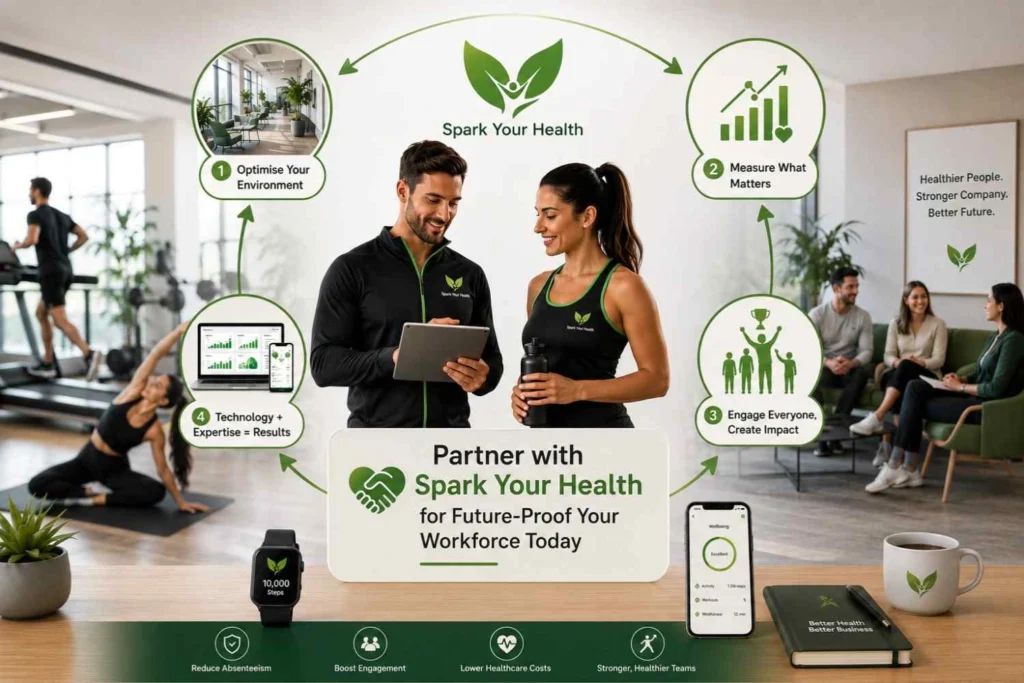
Step 1: Define your physical environment.
A certified professional can only perform at their best within a workspace designed to support them. Ensuring these specialists operate within a purpose-built environment, like a Modern Workplace Fit Out for Employee Wellbeing, removes the practical barriers that undermine even the best wellness programmes before they begin.
Step 2: Establish clear KPIs from day one.
Define what success looks like in measurable terms — participation rates, sickness absence data, employee Net Promoter Score, and workplace wellness ROI calculations. A trained graduate will know exactly how to track these. Give them the tools and the mandate to do so from the outset. This also allows qualified trainers to seamlessly deploy and manage comprehensive Employee Wellness Programs in the UK across your entire organisation.
Step 3: Build company-wide health challenges around their expertise.
A single trainer working with ten individuals has limited organisational impact. A trained professional who architects structured, company-wide physical challenges — steps competitions, posture weeks, mental fitness protocols — multiplies their influence across hundreds of employees simultaneously. This is how corporate healthcare costs begin to fall at a structural level rather than at the margins.
5. Partner with Spark Your Health: The Complete Corporate Wellness Ecosystem
Finding the right talent is half the equation. The other half is giving them the platform to actually deliver results.
Spark Your Health empowers your newly hired health specialists with the Spark Corporate Wellness Programs tracking software, a digital infrastructure that brings together physical activity data, health challenge management, and workforce engagement reporting in one place. HR leaders get a real-time view of programme impact. Certified professionals get the tools to personalise delivery at scale.
Critically, physical fitness and mental health cannot be treated as separate workstreams. The most effective corporate programmes integrate physical coaching with the comprehensive support offered by an Employee Assistance Program UK — ensuring employees have access to both movement-based and psychological support within a single, coherent wellbeing strategy.
This is what separates a fragmented collection of wellness perks from a genuinely high-performing, evidence-based wellness programme that HR can report on with confidence to the board.
Conclusion: Future-Proof Your Workforce Today
The quality of your corporate wellness team starts with a single decision: where did this person train, and does that training meet the standard your employees and your organisation deserve?
Graduates from a credible health and fitness academy bring verified credentials, behaviour change expertise, and the professional framework to operate compliantly within a UK corporate environment. They reduce your legal exposure, improve your health metrics, and build the kind of sustained employee engagement that generic fitness perks simply cannot match. In a landscape where corporate healthcare costs continue to climb and talent competition is fierce, hiring from a recognised academy for health and fitness is not just best practice — it is a strategic advantage.
🌟 Ready to Build a High-Performing Corporate Wellness Team?
Stop guessing and start building with confidence. Spark Your Health connects UK HR leaders with certified wellness professionals and the digital infrastructure to track, manage, and scale your entire corporate health strategy.
Frequently Asked Questions
What qualifications should a corporate fitness professional hold?
A minimum of a Level 3 Personal Training certificate from a CIMSPA-recognised health and fitness academy is the baseline. Level 4 qualifications, specialist certifications in behaviour change, and current professional indemnity insurance are additional markers of a corporate-ready professional.
How does hiring academy-trained staff reduce corporate healthcare costs?
Certified professionals design evidence-based programmes that actually change behaviour long term — reducing sickness absence, improving cardiovascular health markers, and lowering the incidence of musculoskeletal complaints. These are the primary drivers of escalating corporate healthcare costs in UK organisations.
What is the difference between a certified health coach and a personal trainer? A certified health coach is trained in psychological behaviour change models, lifestyle medicine, and long-term habit formation. A personal trainer focuses primarily on physical exercise programming. The most effective corporate hires hold both, which is why graduates from a structured academy for health and fitness are better equipped for workplace settings.
How do we measure the impact of a corporate wellness professional?
Track sickness absence rates, programme participation data, employee engagement survey scores, and productivity indicators before and after deployment. Organisations that establish these KPIs at the point of hire consistently demonstrate measurable ROI within one to two financial years.
Can a single wellness professional manage an entire company’s health programme?
With the right digital platform supporting them, one certified specialist can design and manage company-wide initiatives that reach hundreds of employees. Pairing a qualified professional with a tool like the Spark Your Health corporate platform dramatically extends their reach and impact across the entire workforce.
Spark Your Health is a UK-based corporate health and wellbeing platform. We help HR leaders build healthier, more productive workforces through certified wellness professionals, smart digital tracking, and integrated employee support programmes.